
Introducing a New Way to Fund Forest Restoration
.png)
More people can now take part in restoring native forests on Hawaiʻi Island through our sliding-scale Tree Subscription.
On Hawaiʻi Island, Terraformation seed collectors spend weeks each year gathering seed from ʻŌhiʻa lehua, koa, wiliwili, and other native species. They have to time it carefully, since native seed is only viable for collection during certain windows, and a missed season means waiting another year.
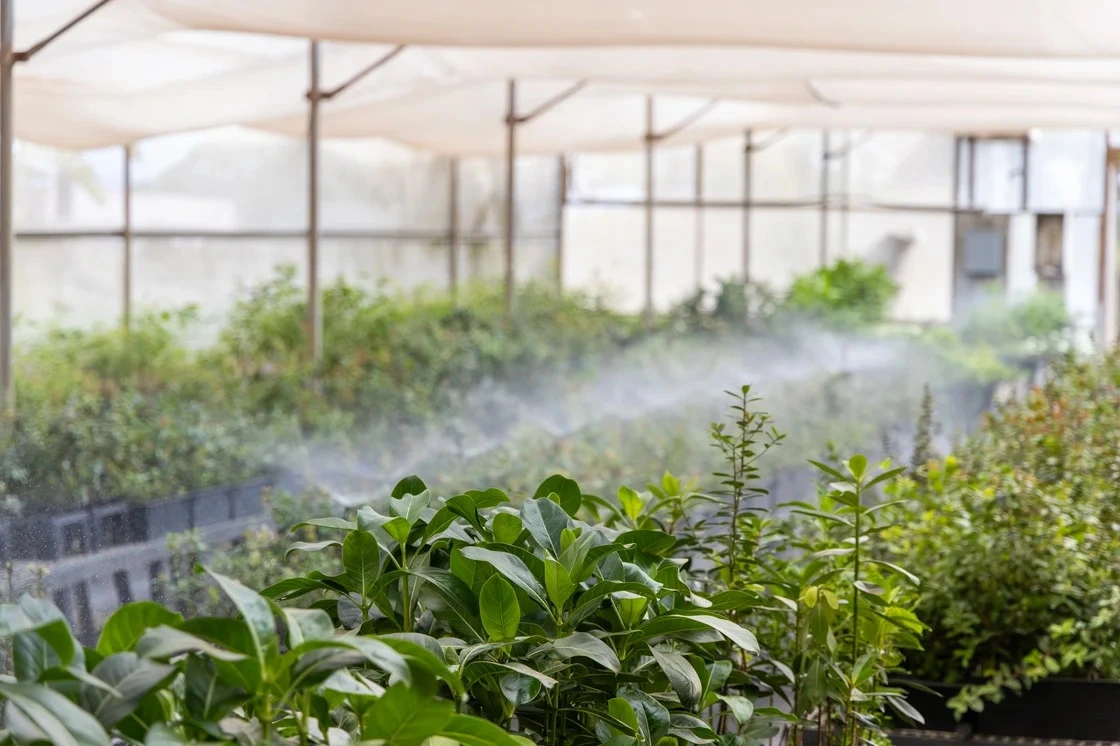
Once collected, that seed is stored in a seed bank and grown in a nursery for six to eighteen months. During this process, the seedling is watered, monitored, then slowly hardened off, exposed bit by bit to sun, wind, and drier conditions, until it’s resilient enough to survive outside a nursery’s care. Some species, like ʻōhiʻa lehua, require the full eighteen months because they're among Hawaiʻi's most important endemic trees, helping protect the high-elevation watersheds that sustain both native ecosystems and local communities.
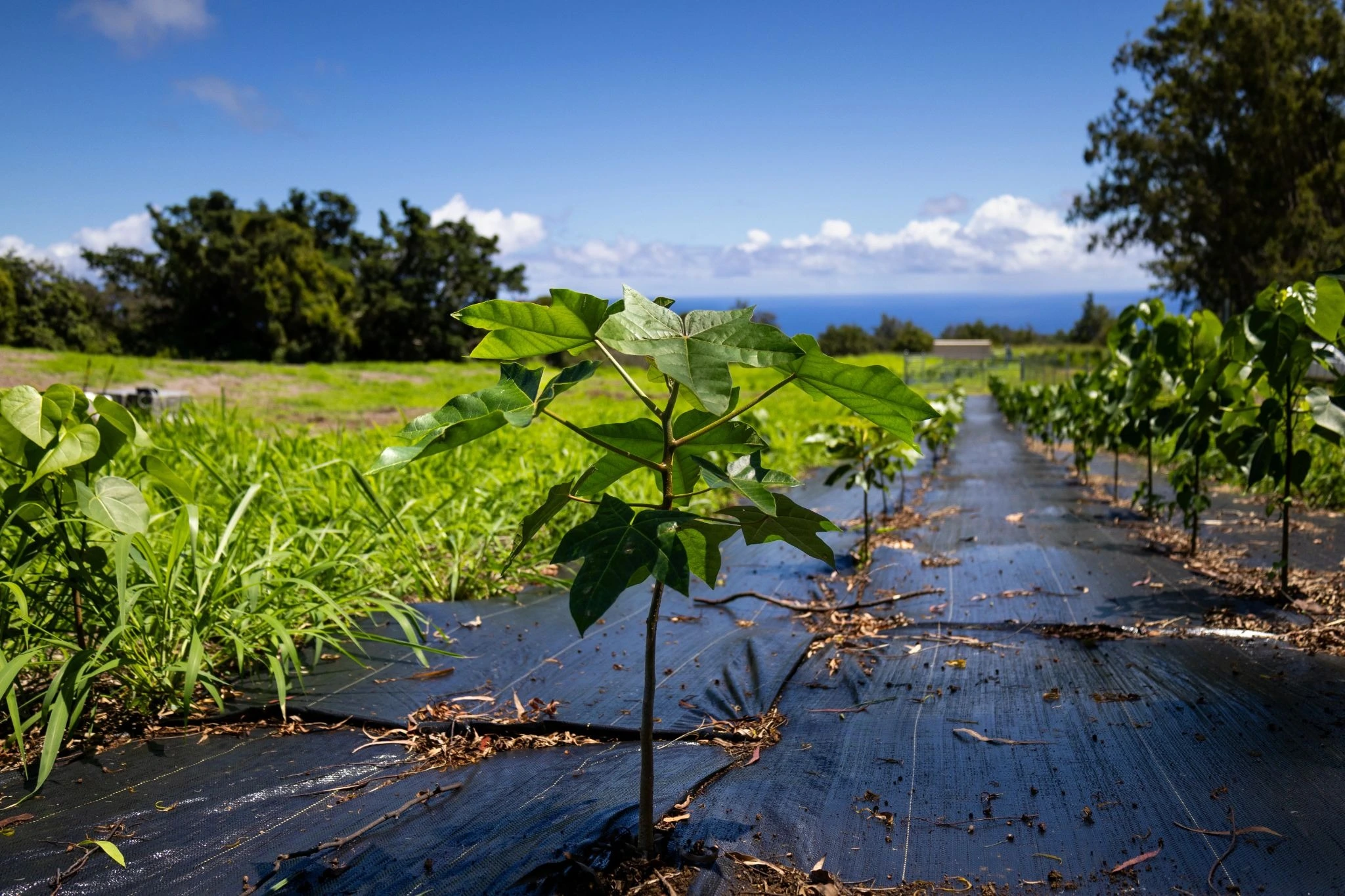
Planting itself is timed to the rainy season, which shifts with the weather each year, so the exact planting date isn’t set by a calendar so much as by what the clouds are doing. Skip any one of those steps and the sapling has a lower chance of making it.
That’s the real cost of a tree: not the planting, but everything that has to happen before and after it, most of which a supporter never sees. That reality also shaped how we fund restoration. Today, we're introducing new Tree Subscription pricing that lets more people take part in supporting that work.
For decades, funding the full restoration process has depended on governments, philanthropists, and corporate investment. Those partnerships remain eseential but they’re not moving fast enough on their own. The United Nations Environment Programme estimates that restoration finance needs to grow from $64 billion to nearly $300 billion by 2030. That gap won’t be closed by a handful of larger checks. It will take a much larger number of people deciding to be part of the solution, even in small ways.
We believe individuals can help close that gap at the level they can afford. Not by replacing large-scale investment, but by supporting alongside it. Together, those individual contributions can help make restoration possible at a much larger scale.
Why we built a sliding scale
Everyone has a different capacity to give. Someone just starting their career might have five dollars a month to spare. Someone further along might have fifty, or more. Both of those contributions matter, and a subscription program that only works at one price point leaves most of those people out. So instead of asking ”what’s the right price for a subscription,” we asked “how do we let more people take part in restoration, at whatever level they can.”
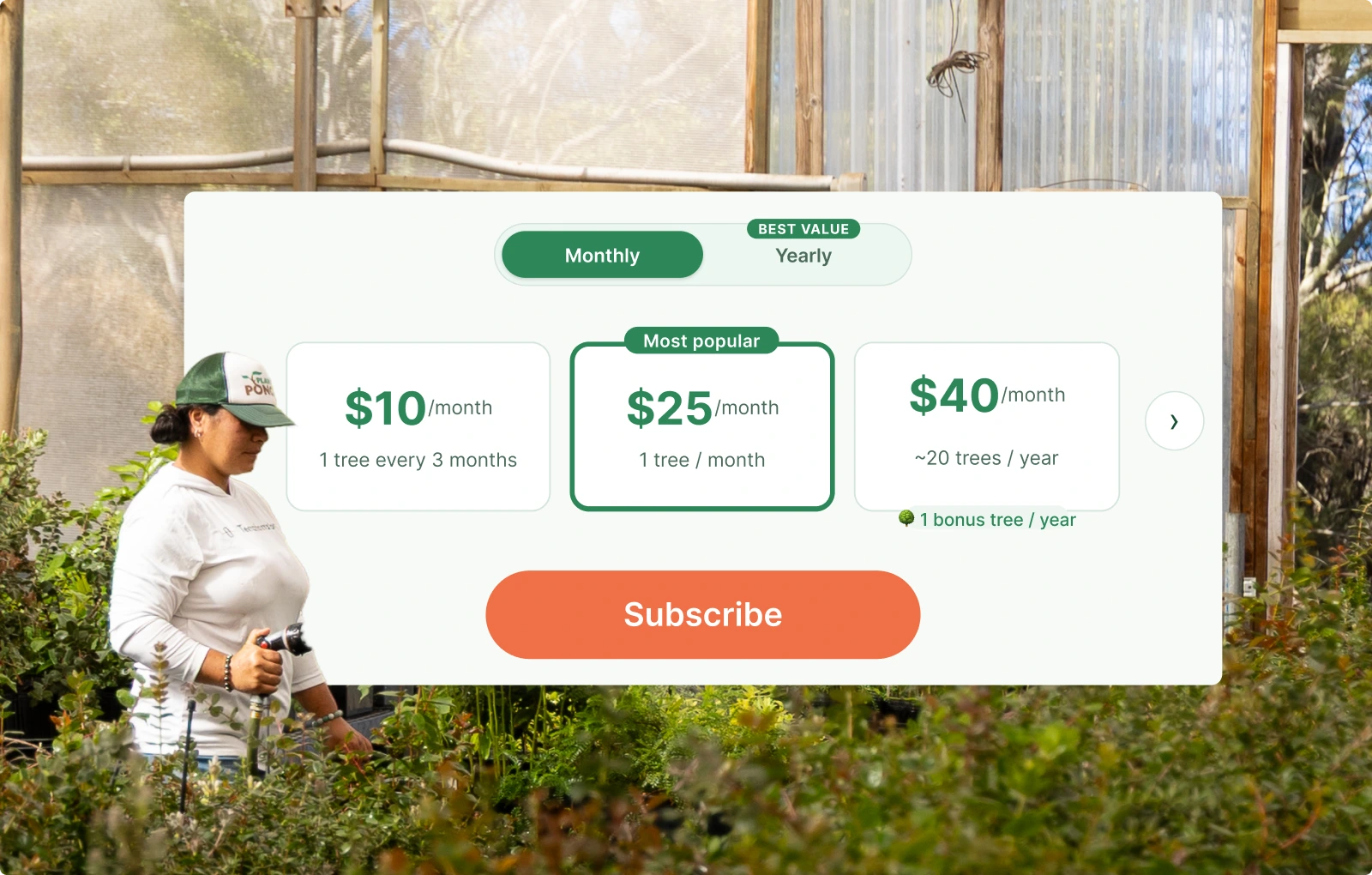
Growing and planting a single tree on the Big Island, covering seed collection, nursery time, hardening off, planting, and years of follow-up monitoring, is a long-term investment. We don’t want cost to be a barrier for participation. And that’s why we’re now offering a full range of monthly tiers: $5, $10, $25, $40, or $50 a month, or the same support paid up-front through an annual plan. At the $25 tier and above, a subscriber is funding a fully resourced tree each month (or multiple), from seed to established forest.
If your monthly amount sponsors less than or more than a single $25 tree, you earn digital ”seeds“ that accumulate month over month until they add up to the cost of a full tree. A $5, $10, or $40/month subscriber still ends up funding real, individual trees, just on a different timeline than someone giving $25 each month. Whether that takes one month or several, every tree which eventually gets funded receives the same years of care as any other.
What staying connected looks like
Restoration takes decades, and it’s easy to lose track of anything that takes that long. We built the subscription around staying connected to that timeline rather than around a single transaction.
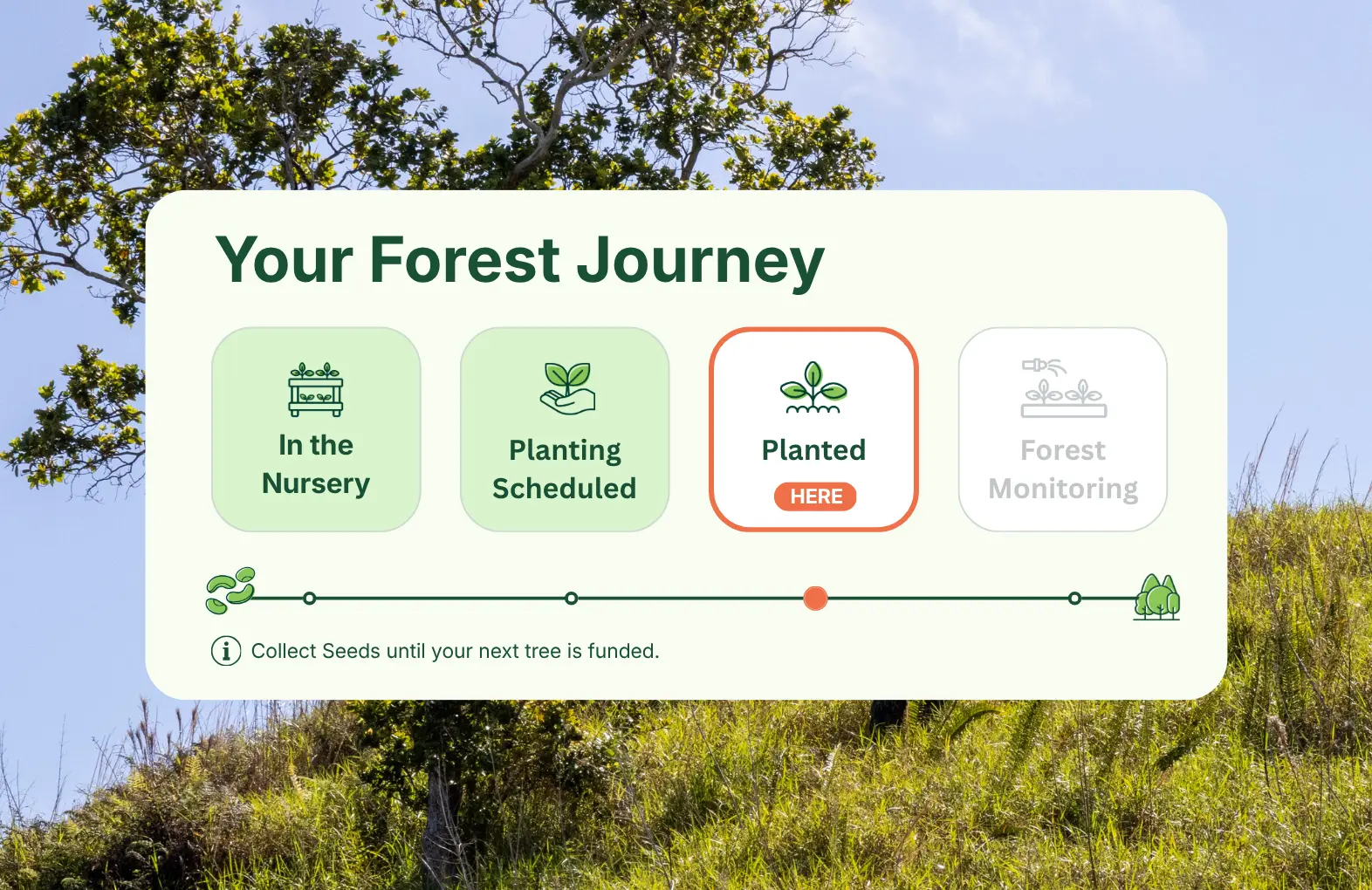
Subscribers get a monthly email update on their trees’ and the project’s progress, so the process doesn’t disappear between the moment they sign up and some distant future report. They also get a dashboard they can log into anytime to check status, from seed to nursery to planted seedling to established forest, so the information isn’t limited to whatever shows up in an inbox once a month.
Later this year, we’re launching a new app that will let subscribers discover and follow additional restoration projects beyond their first one, so the relationship can grow alongside a person’s capacity to give. We want restoration to become something people can check in on, ask questions about, and watch unfold, almost in real time, as it actually happens on the ground.
Join the movement
Every subscriber is one part of a much larger recovery, the same way one species is only ever one part of a healthy forest. No single contribution restores a forest on its own. But when thousands of people each choose to fund what they can, on the timeline that works for them, those individual choices add up to landscape-scale change.
Choose the monthly amount that works for you, and become part of restoring native forest on the Big Island of Hawaiʻi.
Visit terraformation.com/plant to get started.
Stay Connected
Want to keep up with what we're learning, building, and exploring?
Subscribe to The Understory, our podcast featuring candid conversations about the future of nature restoration, and sign up for our newsletter to receive the latest stories, insights, and updates from the field.
Follow Terraformation on social media:
- LinkedIn: Terraformation
- Instagram: @globalterraform
- X: @TF_Global
- Facebook: Terraformation
And to go deeper on any of the above, reach out: info@terraformation.com.