


Where We Work
We actively develop country platforms and landscape-scale restoration projects across key tropical biodiversity regions around the globe, with Hawaiʻi serving as Terraformation’s headquarters and Innovation Hub. Scaling reforestation requires coordinated action across the entire ecosystem, from national governments and financial partners to local forestry organizations and communities. As a convener, Terraformation invites global partners to join us.
18
Countries
19
Seed Banks
5.4M
Trees Planted
68
Partners
*Figures as of July 2026 representing cumulative projects, partners and geographies supported to date.

Country Platform
A New Paradigm Is Needed
A New Paradigm Is NeededTraditional reforestation efforts are deeply fragmented. Project developers often operate separately in the same region, competing for the same pools of capital, struggling with similar bottlenecks, and navigating complex land tenure and regulatory hurdles. At the same time, investors often shy away from ecologically high-impact areas because of perceived country risk in policy, law, and project permanence.
A Collaborative Model for Scale
A country-level platform is an operational model designed to concentrate reforestation impact within a specific state, country, or region It removes barriers to restoration at scale by strengthening delivery capacity, aligning practitioners and funders around a shared vision, and enabling coordinated action. Platforms act as the lynchpin to mobilize finance and action for reforestation at scale, shifting independent actors from competition to collaboration.
Ecosystem Partnership
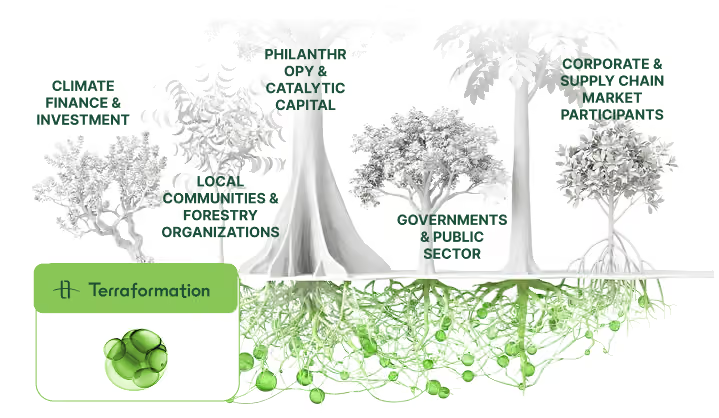
Terraformation connects the ecosystem partners required for scale. Tap a row for details.
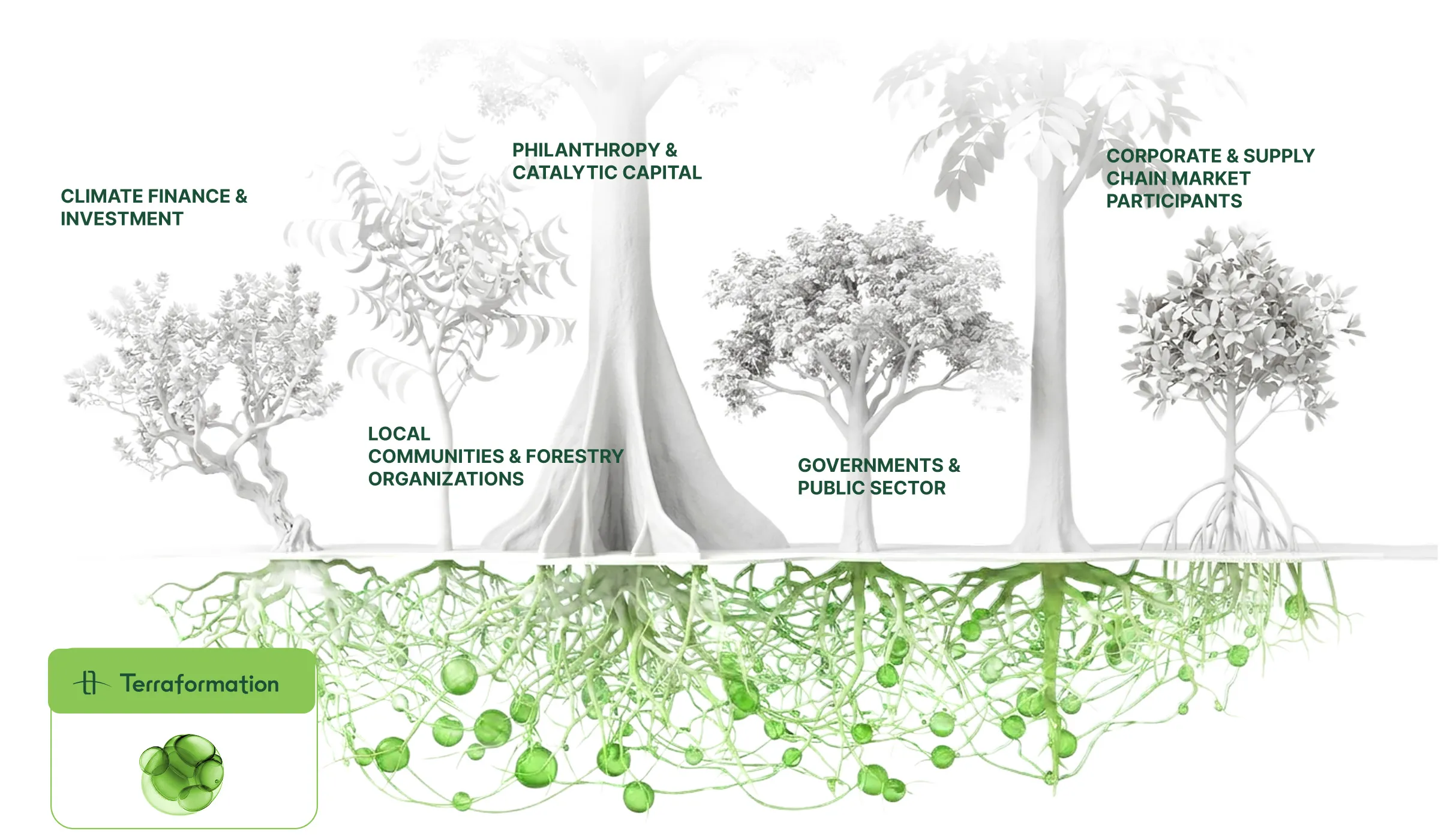
Governments & Public Sector
•
Strategy Owner, Enabler & Regulator
Owns and coordinates the National Forest Restoration Strategy, strengthens land tenure and resource-rights frameworks, and establishes regulatory oversight for policy and regulation of land use and restoration work.
Local Communities & Forestry Organizations
•
Implementation & Stewardship Leaders
Deliver native biodiverse restoration, manage local seed banks and tree nurseries, and support long-term livelihoods through restoration employment, agroforestry income and other benefit sharing opportunities.
Philanthropy & Catalytic Capital
•
Capital Providers
Inject upfront catalytic and concessional capital to advance high-impact restoration outcomes, de-risk projects, strengthen local capacity, and help unlock later-stage public and private finance
Climate Finance & Investment
•
Capital & Investment Partner
Structures and deploys investment capital, develops blended finance vehicles, assesses project risks and returns, and connects restoration projects with long-term sources of climate and nature finance.
Corporate & Supply Chain Participants
•
Market & Offtake Partner
Create demand for restoration outcomes through carbon and biodiversity purchases, supply chain investments, and long-term offtake agreements, while supporting nature-positive practices across their operations and value chains.
Academic & Extension Organizations
•
Research & Knowledge Partner
Generates applied research, validates restoration approaches, monitors outcomes, and translates scientific evidence into practical guidance, training, and technical support for governments, practitioners, and communities.
Terraformation
•
Platform Facilitator
Drives the ecosystem movement and integrated partnerships for landscape-scale restoration. Provides deep technical expertise, aggregates blended financing vehicles, delivers seed-to-forest capacity building programs, and applies on-the-ground innovation and field validation with managed projects.
Three Core Components
A successful Country Platform is anchored in three essential, interconnected building blocks that mobilize finance and strengthen long-term restoration success.
Tap a card for details.
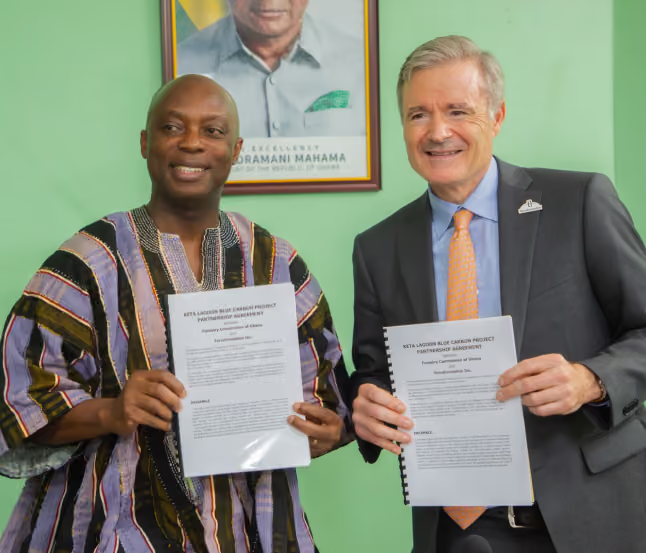
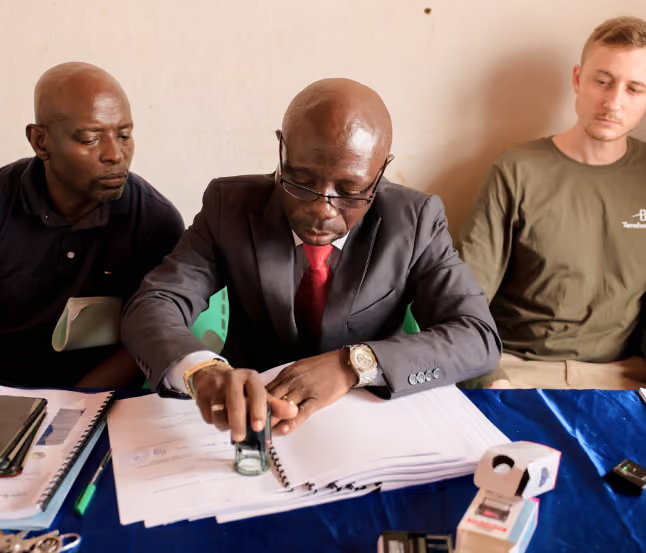
1. Restoration Capacity & Infrastructure
Anchored in national forest restoration strategies, we partner with local organizations to strengthen local skills, systems, and infrastructure needed to deliver and monitor high-quality restoration at scale. Our Seed to Forest Accelerator equips local forestry teams and communities with the training, biodiverse seed-to-forest supply chains, nursery capacity, and advanced monitoring technology required for successful implementation.
Example: We assess and strengthen the national seed supply chain in Ghana—from quality seed production and storage to nursery capacity and sustainable business models—to ensure a reliable supply of high-quality seedlings.
2. Governance, Policy & Finance Framework
We partner with governments to strengthen the policies, governance frameworks, and financing mechanisms needed to achieve national forest landscape restoration goals—removing barriers, reducing risk, and unlocking investment at scale.
Example: We assess current restoration finance flows and funding gaps, then support a national finance mobilization strategy that matches commercial and carbon finance, concessional capital, and philanthropy to different ecosystems and financing needs.
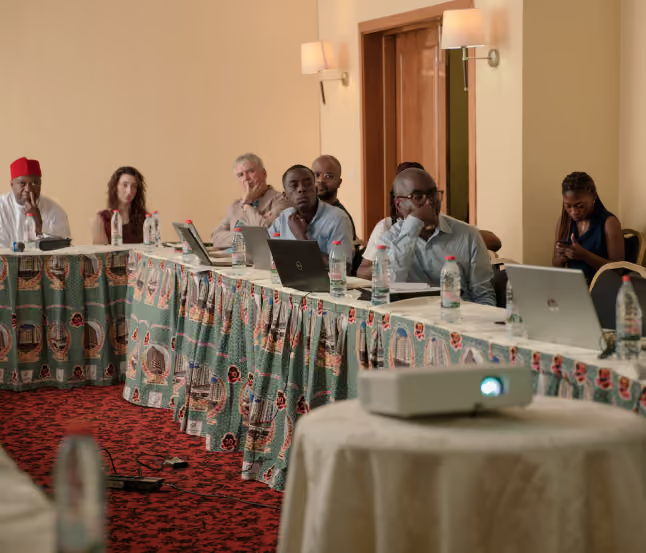
3. Community of Practice & Cross-Sector Collaboration
We convene critical stakeholders around a single table, including governments, investors, Indigenous Peoples and local communities, forestry organizations, NGOs, and others. By building coalitions around shared restoration goals, we create the conditions for coordinated action at scale.
Example: We establish a national restoration community of practice that regularly brings stakeholders together to share lessons, align priorities, and jointly address implementation barriers.
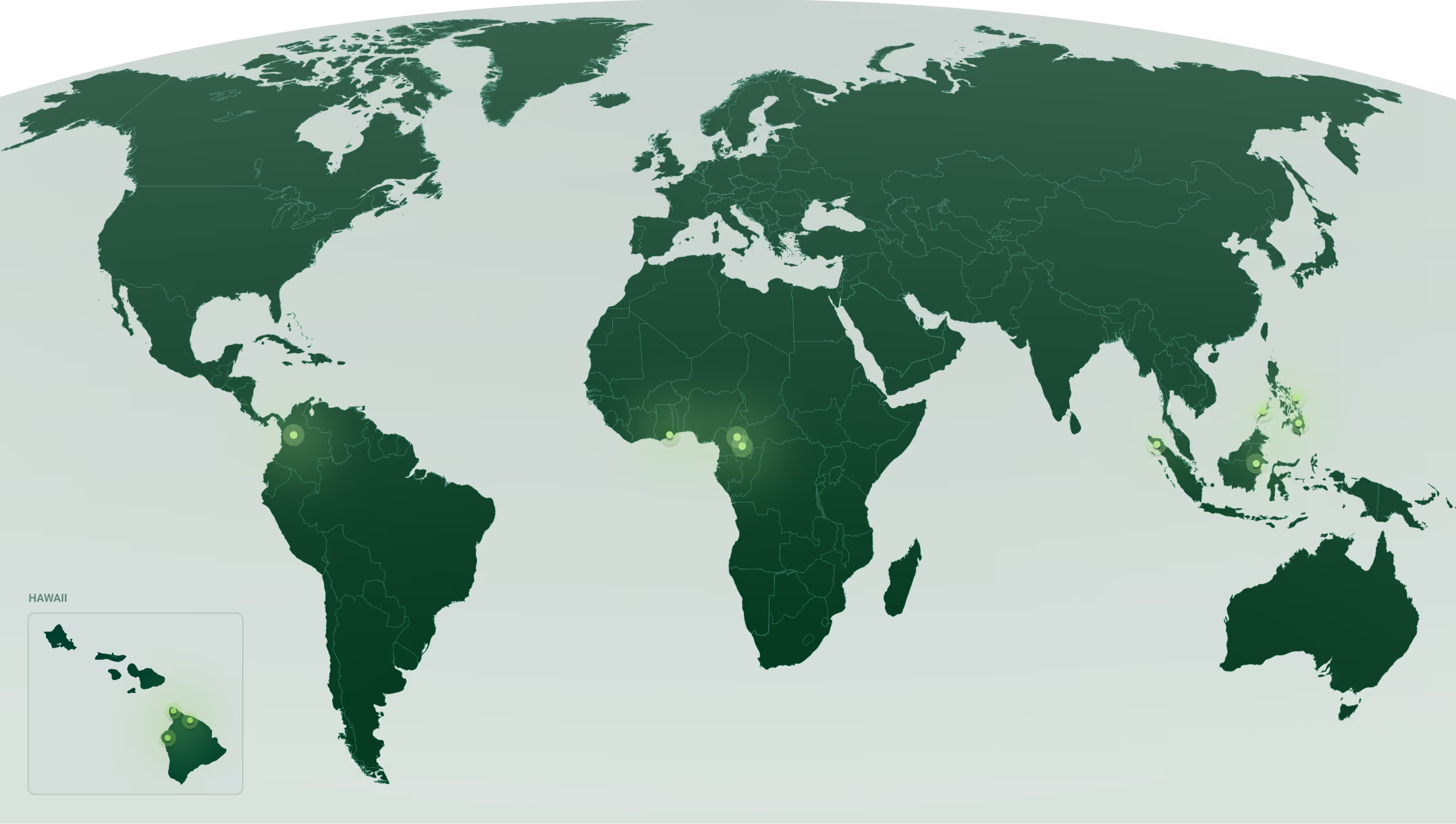
Our Global Footprint
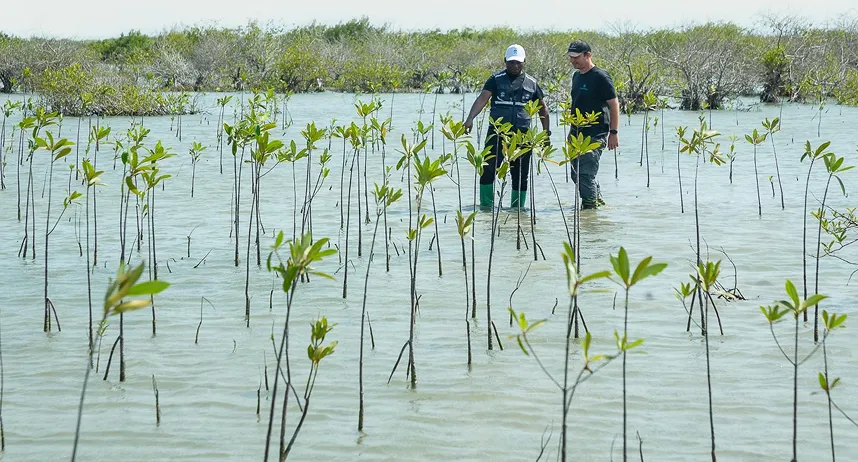
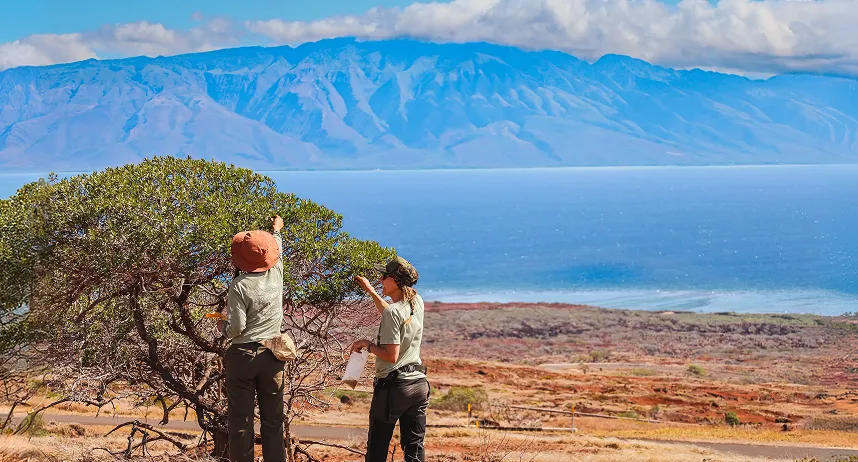
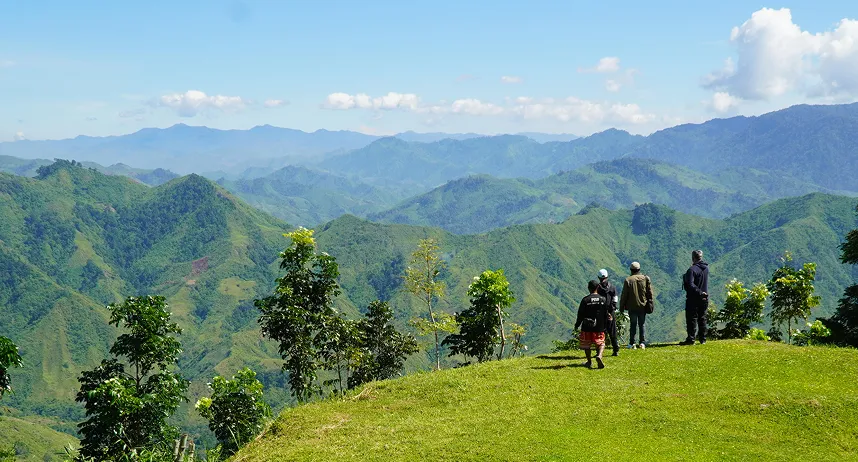
We partner with national ministries to turn restoration ambitions into practical delivery systems — aligning stakeholders, strengthening local capabilities, building seed and nursery infrastructure, mobilizing finance, and deploying monitoring technology.


.webp)
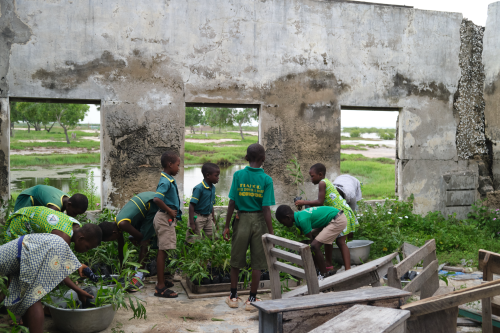





Projects Designed for Impact
Within country platforms, we develop high-integrity restoration projects that put our approach into practice, using carbon finance and funding where appropriate. These projects prove how community leadership, science, capacity, infrastructure, monitoring, and finance work together — generating evidence that strengthens restoration across the wider country platforms.
Communities & Land Rights
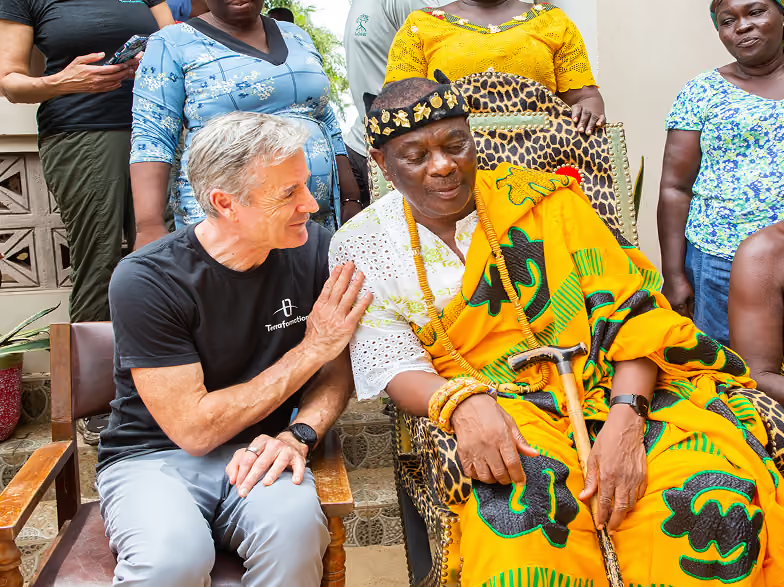
Projects begin with the people who live in, use, and depend on the landscape. We work with communities and rights holders to understand land and resource rights, including customary rights; support meaningful participation and free, prior, and informed consent where applicable; shape fair and transparent benefit-sharing approaches; and incorporate community priorities into project design and long-term stewardship.


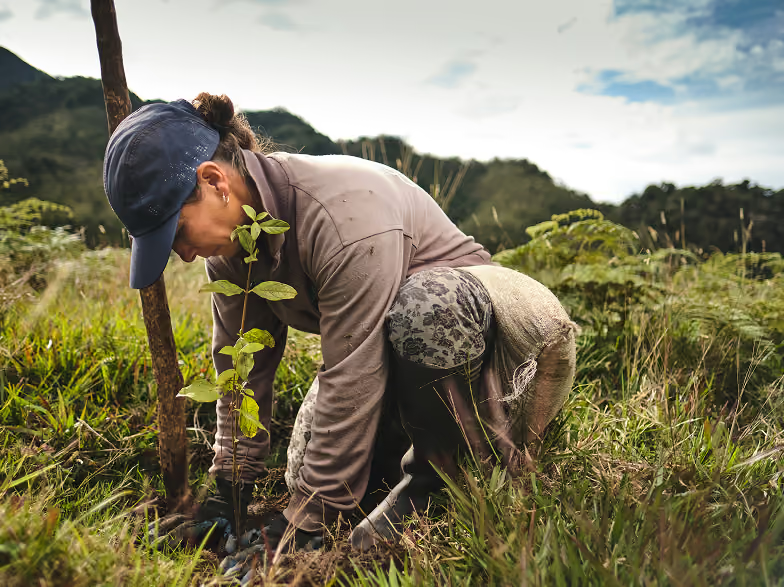
Restoration Science
Our restoration strategies are designed around the ecology of each landscape. We use diverse, site-appropriate native species and restoration approaches intended to rebuild forest structure, ecological function, biodiversity, and long-term resilience. Monitoring helps us understand how ecosystems are responding over time and adapt restoration practices as field evidence improves.
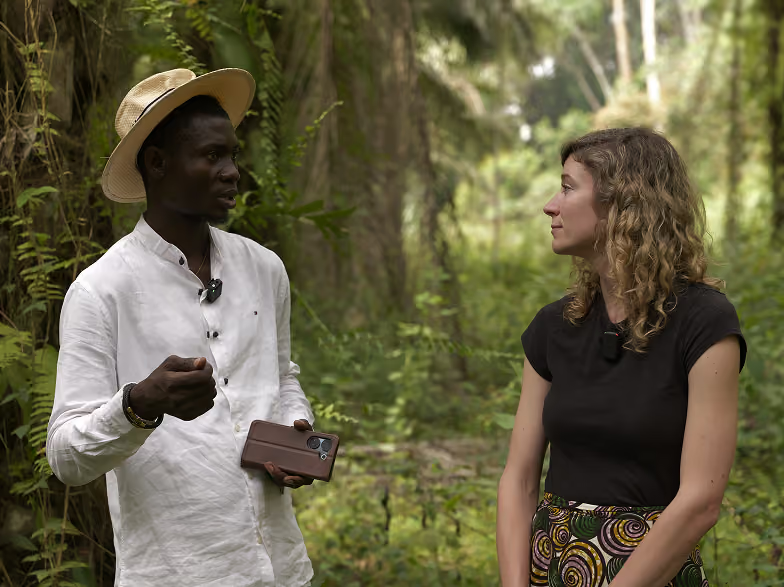
Designed for Implementation
Project design is grounded in how restoration will be delivered. We work with local partners and implementation teams to test assumptions around site conditions, restoration methods, seed and nursery supply, field capacity, costs, maintenance, monitoring, and operational risk before scaling commitments.

Durable Financing
High-impact restoration needs capital structures that reflect how projects develop and perform. We combine project economics, catalytic funding, carbon finance, concessional capital, and other sources to build financing pathways that can support long-term restoration at the same time we allocate risk realistically across the different project stages.
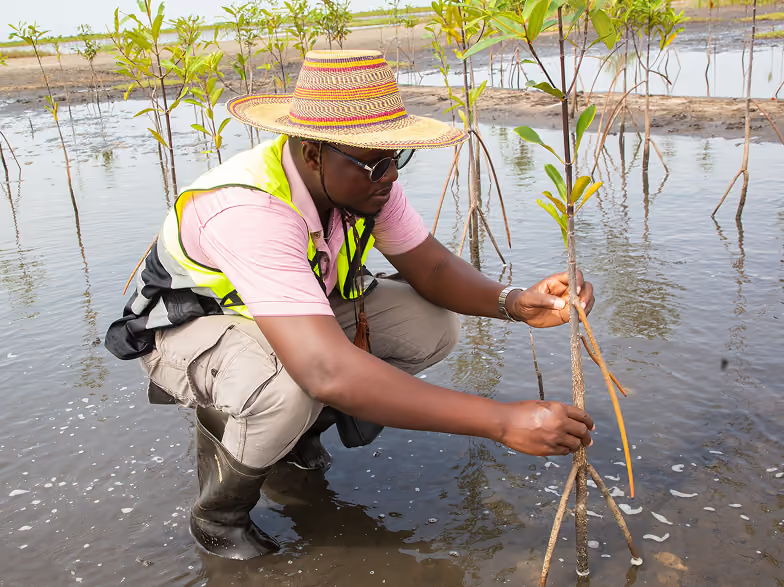
Carbon Accounting
Project design is grounded in how restoration will be delivered. We work with local partners and implementation teams to test assumptions around site conditions, restoration methods, seed and nursery supply, field capacity, costs, maintenance, monitoring, and operational risk before scaling commitments.
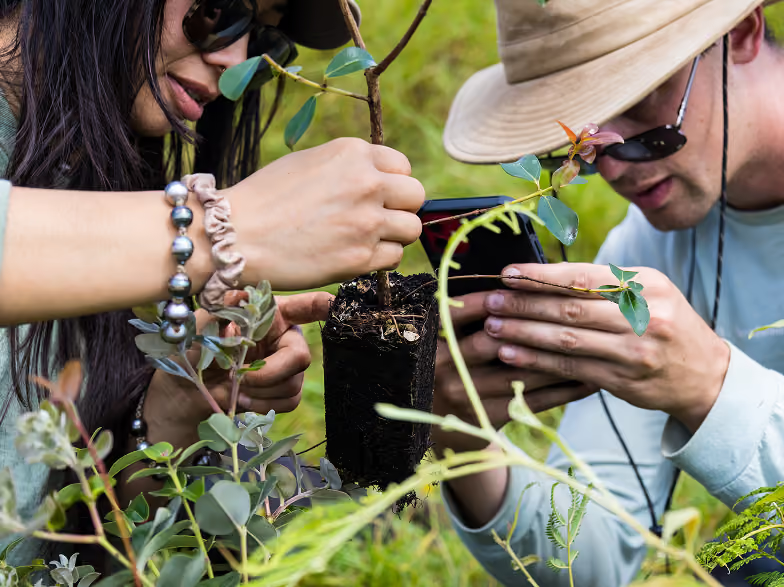
Monitoring & Adaptive Management
Restoration doesn't end when trees are planted. A monitoring framework tracks progress toward community, biodiversity, and climate outcomes, flagging risks to permanence. Terraware combines field data, remote sensing, and monitoring technology with rigorous protocols to ensure trustworthy data—turning it into adaptive management that drives real ecological impact.
Designed for Replication
Each project generates the operational knowledge, local capacity, infrastructure, and evidence needed to inform future restoration across the country platform.
Built on Trusted Standards



Each carbon project is developed and assessed against leading carbon and biodiversity standards, giving partners, funders, and communities confidence in the integrity of its outcomes.
*Standards and ratings apply to eligible carbon projects only.


