
From Paper to People: Five Grounding Reminders from Eastern Cameroon
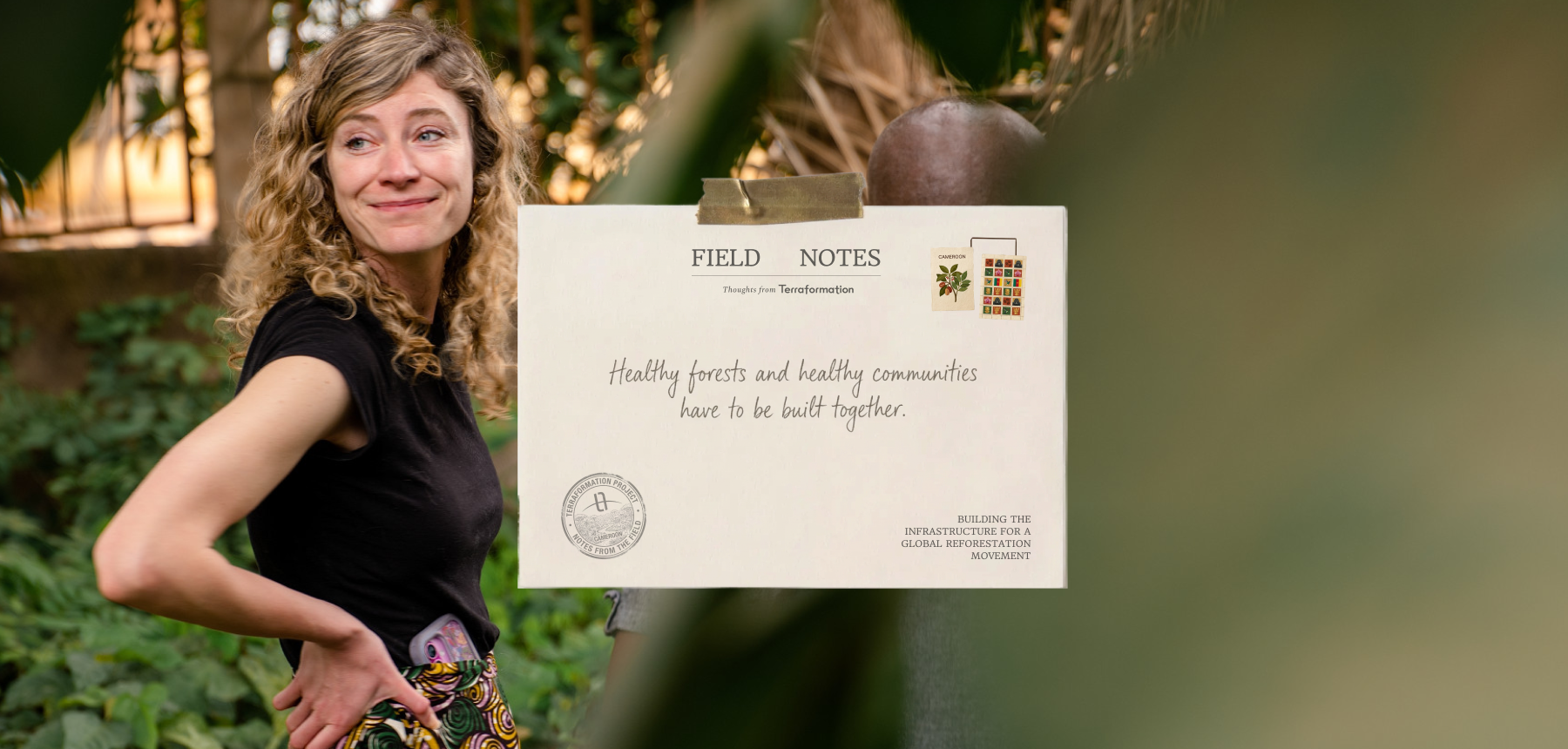
Some site visits leave you with a notebook full of follow-ups, budget questions, and action items. This one did too. But what stayed with me most from my recent trip was something harder to summarize: a renewed conviction that restoration only becomes real when it is rooted in the lives, aspirations and practical realities of the people who know a landscape best.
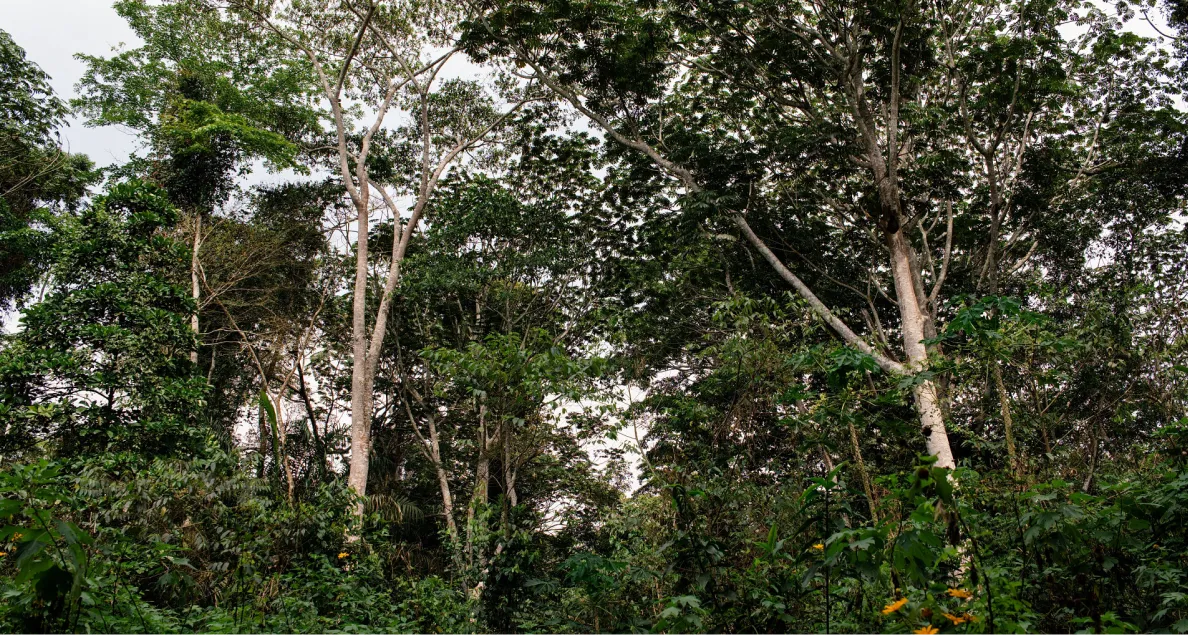
Over 10 days, our team traveled with our local Cameroonian partner, Centre Technique de la Forêt Communale (CTFC), through our project areas in Ndélélé and Bétaré-Oya in eastern Cameroon. This is where the Iroko Restoration Project is taking shape across council forests – forests managed by local municipalities under Cameroonian law. We later traveled west to Tonga and Dimako, two earlier-established council forests, where restored landscapes offered a living picture of what this work can look like decades from now. Along the way, we gathered stories and context from the field.
On paper, a project can look straightforward enough. In the field, everything sharpens. Distances feel longer. Roads are harder. Communication gaps matter. And every conversation reminds you that restoration is never just about trees.
The project has real momentum, including 99-year land agreements signed during the mission and a recent Sylvera pre-issuance “A” rating. These are important milestones. But field visits are their own kind of due diligence, to hear directly from communities about what success can look like on the ground.
This trip reinforced five things for me:
- the depth of stewardship already present in these communities;
- the need for people to see themselves in the project;
- the importance of ongoing consent;
- the fact that long term project success depends on people seeing real value in trees standing; and
- the power of local champions already on the ground.
Communities Already Hold Deep Stewardship Values
This may sound like a no-brainer, but this trip reinforced that we are not bringing conservation values to these communities. There is certainly education we can support around carbon, but the deeper ethic of caring for land is already there.
We saw that vividly in Mepouta (Ndélélé), where we sat along the banks of the Kadéï River with a woman known locally for her connection to the hippos. In this village, there is a belief that when women die, they transform into hippos. The elder woman, whom the community calls Maman (“mother” in French), called out to the hippos –relating to them as her sisters – by name while her daughter and granddaughter sat beside her, learning that role. It was a powerful reminder that local stewardship already exists and is woven across generations and deeply into culture.

People Need to See Themselves in the Project
A second lesson from the field was that people have to be able to see themselves, their livelihoods, and their future in the project. If they cannot, the project will not hold.
That came into focus during a community awareness meeting in Pana 1, near Ndélélé in east Cameroon, where villagers gathered around maps of the proposed restoration sites, with native tree restoration in some areas and cacao agroforestry in others. I heard from the traditional chief, who is also a herder, about grazing patterns and how existing pastoralist routes are reflected in the restoration design.
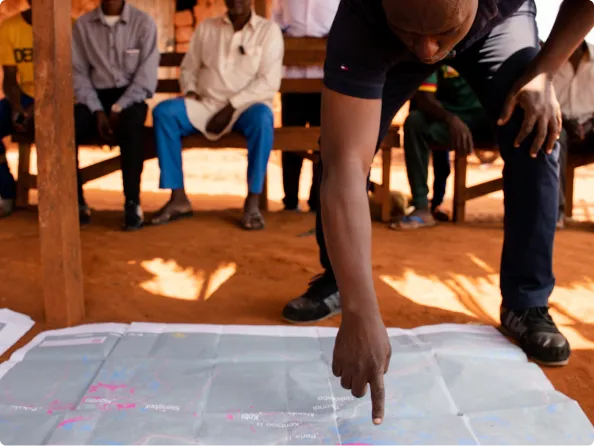
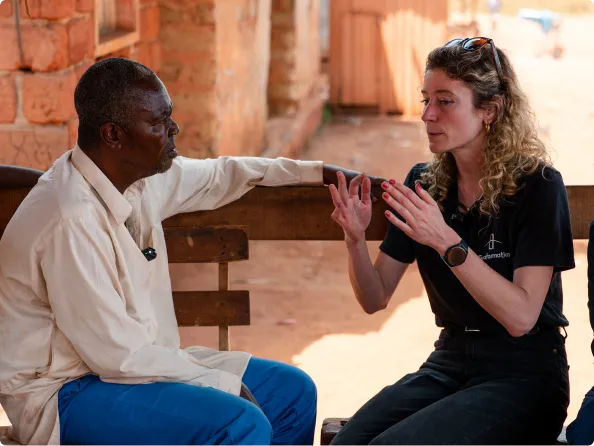
Those conversations were not just about whether the plan looked good on paper. They were about whether the proposed sites actually matched how people use the land in their daily lives, and where adjustments might be needed.
Consent Is Ongoing
The trip also highlighted a misconception I hear often: consent is not something you “complete”. At its most human level, consent means people understand the project, understand both the benefits and the downsides and remain meaningfully bought in over time. That requires ongoing communication, not a one-time meeting.
We saw this in Pana 1. A young man introduced himself as a youth representative and explained that he had recently moved back to the village, heard about the project, knew that every project has pros and cons and he wanted to better understand the downsides. I loved that question because it captured what real consent looks like: not polite nodding, but real questions.
Later in Bétaré-Oya, I found myself walking through the project’s theory of change with a community council representative to see whether it actually made sense in the context of his lived reality.

Permanence Depends on Trees Being Worth More Standing Than Cut Down
Another truth the field made plain is that permanence depends on trees being worth more standing than cut down. If communities do not have viable economic alternatives to the practices that drove degradation in the first place, those activities are likely to continue, because immediate needs like food, income, and shelter will always feel more urgent than restoration.
Again and again, community members spoke about wanting meaningful opportunities close to home. In Bétaré-Oya, a council member and mother told me that young people need a reason to stay, and that she wanted a reason not to worry about her son leaving for dangerous work in the gold mines.
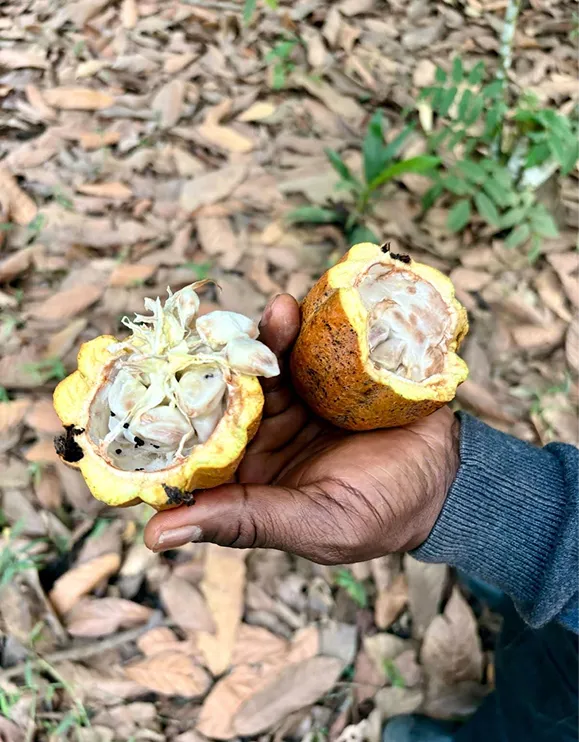
In nearly every village we visited, farmers spoke eagerly of cacao as a long-term source of income that could grow in value over time and be passed on to their children, unlike the exhausting cycle of replanting annual crops like cassava and peanuts year after year. That kind of household-level benefit is essential to permanence. It is why the project is designed to create local jobs in nurseries, tree planting, and maintenance, while also supporting livelihoods through deforestation-free cacao.

The Power of Local Champions
What gave me the most hope was seeing how much local leadership was already alive on the ground. In Ndélélé, the town hall communications officer stole the show. He was full of energy and deeply committed to building trusted local channels through radio, Facebook, WhatsApp and soon TikTok. We arrived expecting to document his community’s story, but before long he had pulled out his own camera, started interviewing us about the project and aired it locally. When I asked whether he could help us communicate about the project, he was already one step ahead. The next day, he sent me radio clips he had produced in local languages, breaking the project down in simple terms for morning and evening broadcasts.

In Dimako, I walked through Cameroon’s pioneering Council Forest with a forestry technician who shared lessons from years of building community understanding around sustainable forest management and the fair sharing of community benefits.What made that moment so powerful was that it was not abstract. It was local proof that this kind of restoration can work and endure.
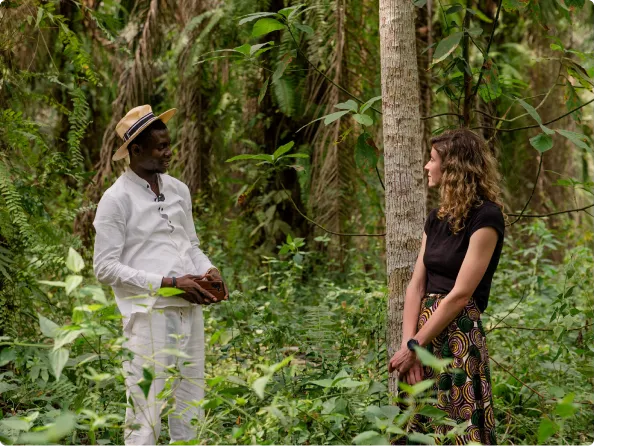

In Tonga, in western Cameroon, while we were visiting an earlier restoration site, a cooperative leader heard we were in town and flew in from Belgium, where he works with the Belgium-Cameroonian trade association. He spoke about how he could help cacao cooperatives in our project area succeed. It was a striking reminder that the project is already beginning to attract the attention of people who see real long-term potential in helping local farmers build stronger livelihoods.
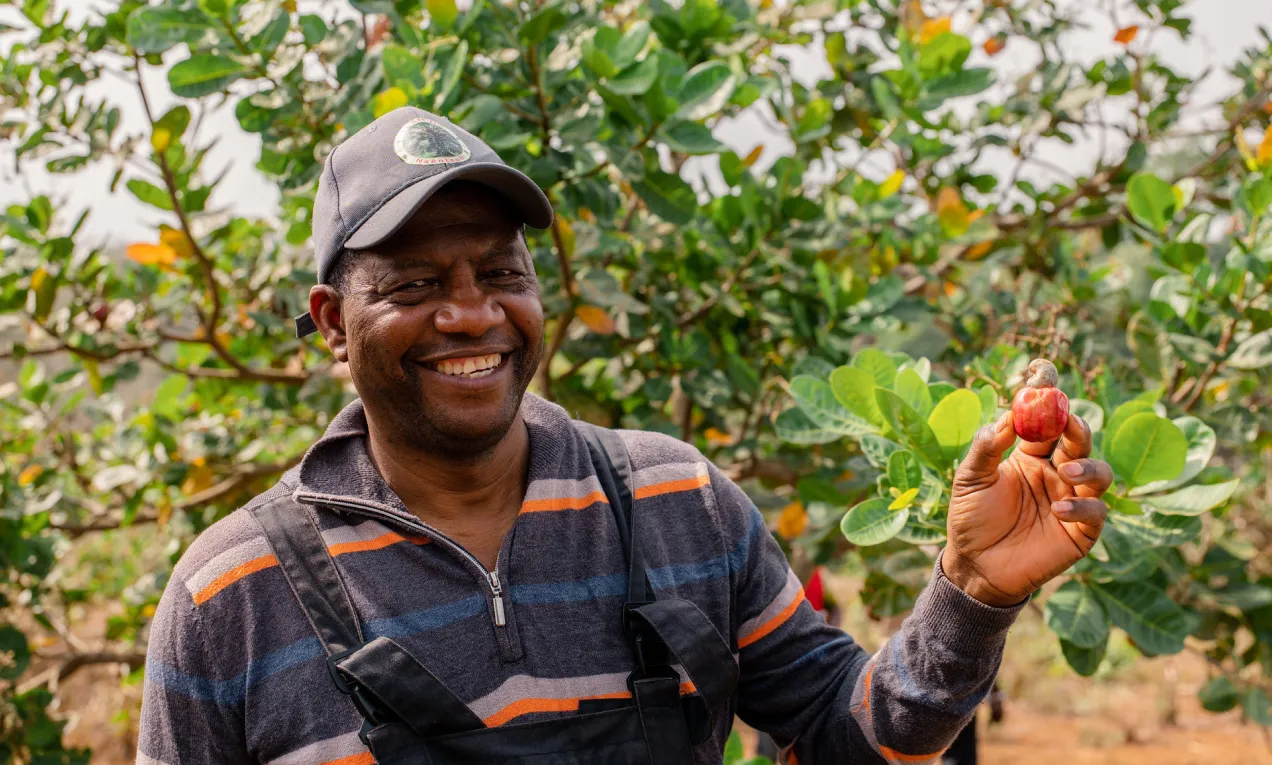
To come full circle, back in the village where we watched the elder woman call to the hippos, I spoke with a young woman who was the chief's daughter. She showed me the fields where she and her brothers are already cultivating cacao and told me about her hope of becoming a nurse and one day serving her community. When I asked whether the village had considered ecotourism, she said she would rather see her community grow through stewardship of the forest, because she knows too many visitors would disturb the hippos. It was a hopeful reminder that young people are often already making the connection between ecological balance and their community’s future.

What Stayed With Me
What stayed with me most was not a statistic or a milestone. It was how many people spoke about the future with both realism and hope. In different ways, they all pointed to the same truth: healthy forests and healthy communities have to be built together.
These are the people and stories behind the project. The Iroko Restoration Project matters for its carbon and climate value in one of the world's most vital rainforest basins, but also for what it can help make possible locally: restored ecosystems, renewed livelihoods, and a future that communities recognize as their own.