
When the Forest Calls Us Home: Reflections from Reforest the Future
A recap of Terraformation's Reforest the Future Summit during Climate Week NYC 2026: how we’re bringing together actors to reimagine and take action towards a global restoration movement built on community, trust, and love.
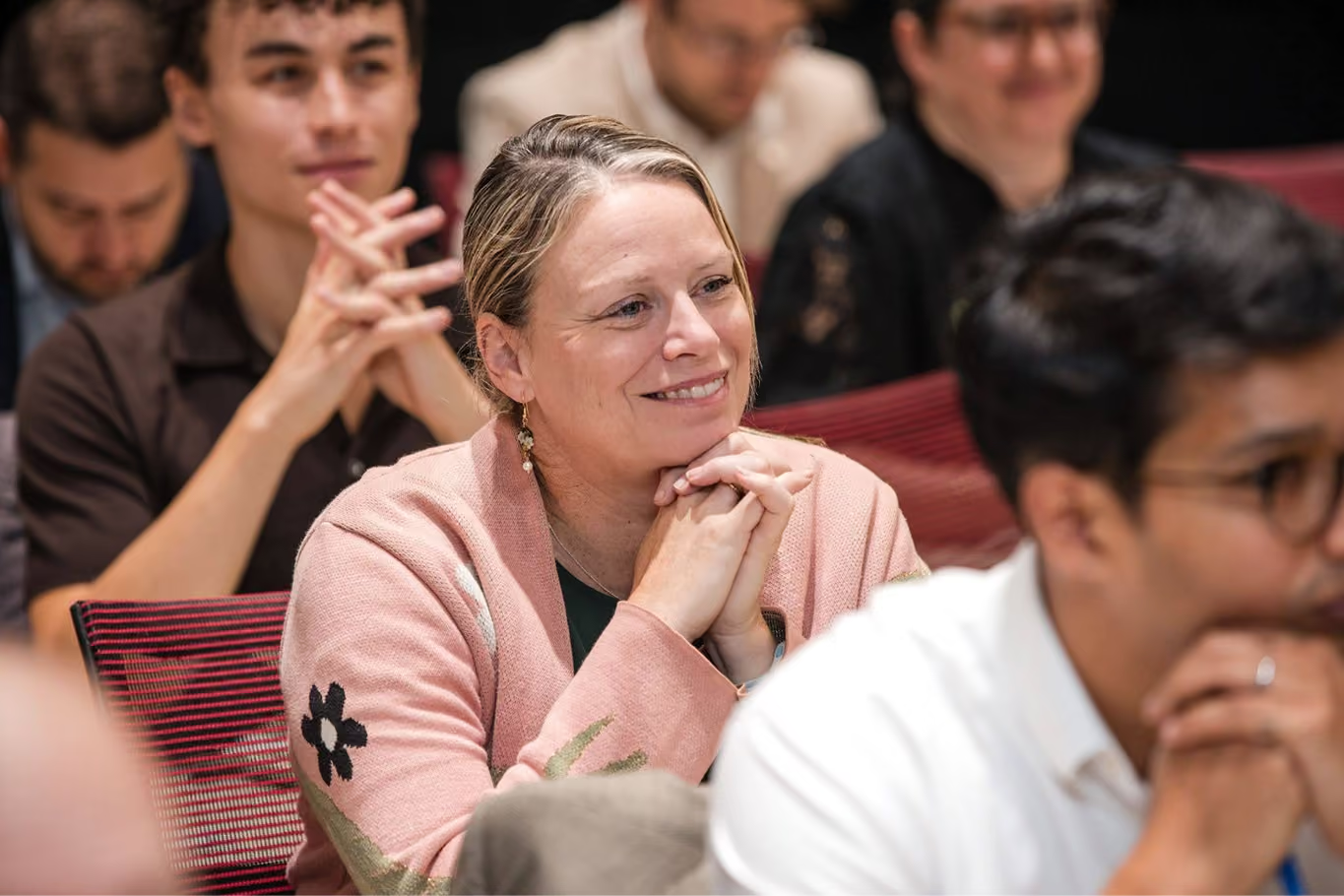
Normally, you don’t hear the word love mentioned at Climate Week. Especially in New York City, when the hustle and bustle is real. When roads are blocked off as the UN General Assembly is in town, and a taxi ride will take you two hours to go two miles. When words like “decarbonization” and “AI” come up repeatedly as sustainability leaders look for and share their best advice as they navigate new business decisions, politics, and complexity.
And then there’s a half-day summit on forest restoration that creates space to feel, connect, and breathe easy. Breathe heavy.
It grounds us in purpose and our why, and invites everyone to join the movement.If this sounds a little unusual for Climate Week, take it from our President, Jad Daley, who put it beautifully in his opening remarks:
"This is more about people than it is about trees. And the secret ingredient is love: love of each other, love of place, love of the work we do. This kind of radical collaboration based on love is what will propel us to a new level of teamwork in making this giant leap together—collaboration instead of competition."
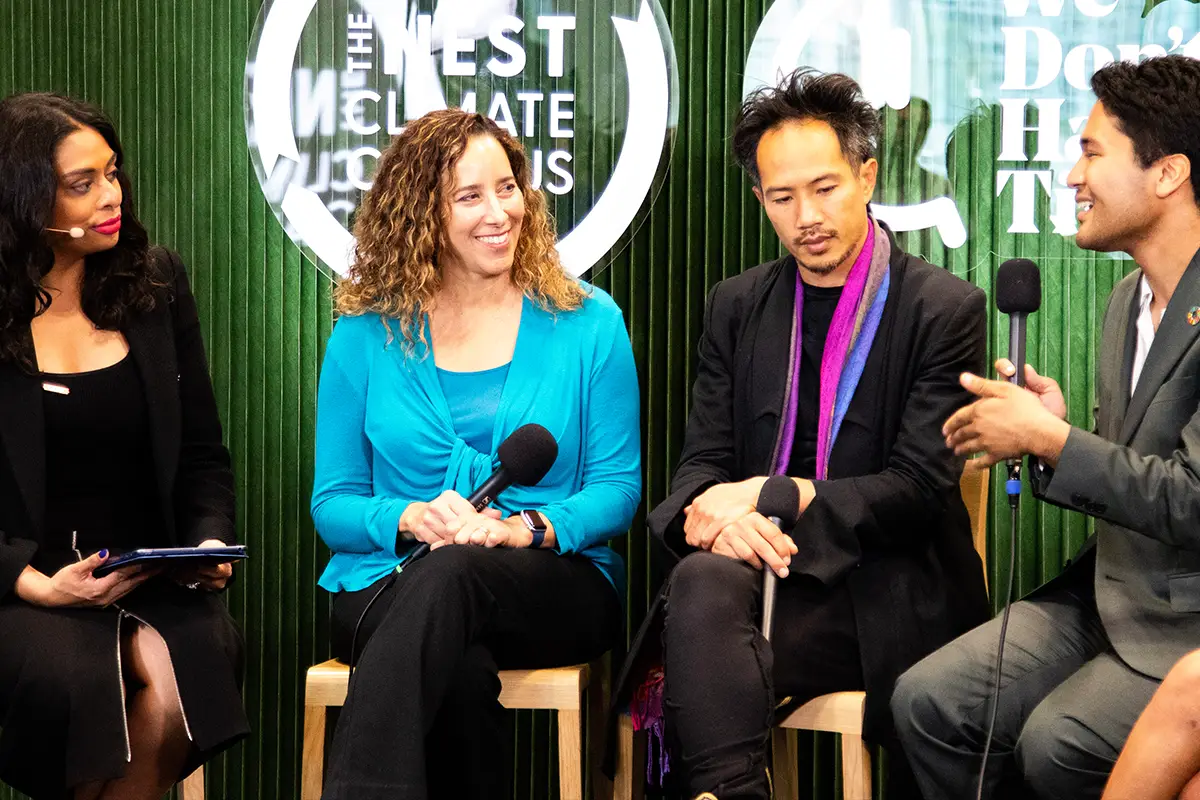
Over 250 attendees joined us for our Reforest the Future summit. Below, we summarize the main takeaways from the sessions and share full YouTube videos, favorite photos, and quotes.
We want to remind you: planetary-scale restoration requires all of us! We’re all in this together, and we invite you to join us. This is just the beginning.
Keynote Speakers
Writer and poet Jason S. Price opened the summit with a poem titled The Forest Remembers:
“The forest remembers your redemption… reminding you gently to bow your head in awe of waterfalls, fireflies, untrodden paths… beckoning you to dance in the melody of breezes, in the salt of sunshine… whispering, tenderly whispering their melodious mantra: Come home, come home, come home.”
— Jason S. Price, Author and Poet, Jason Price Books
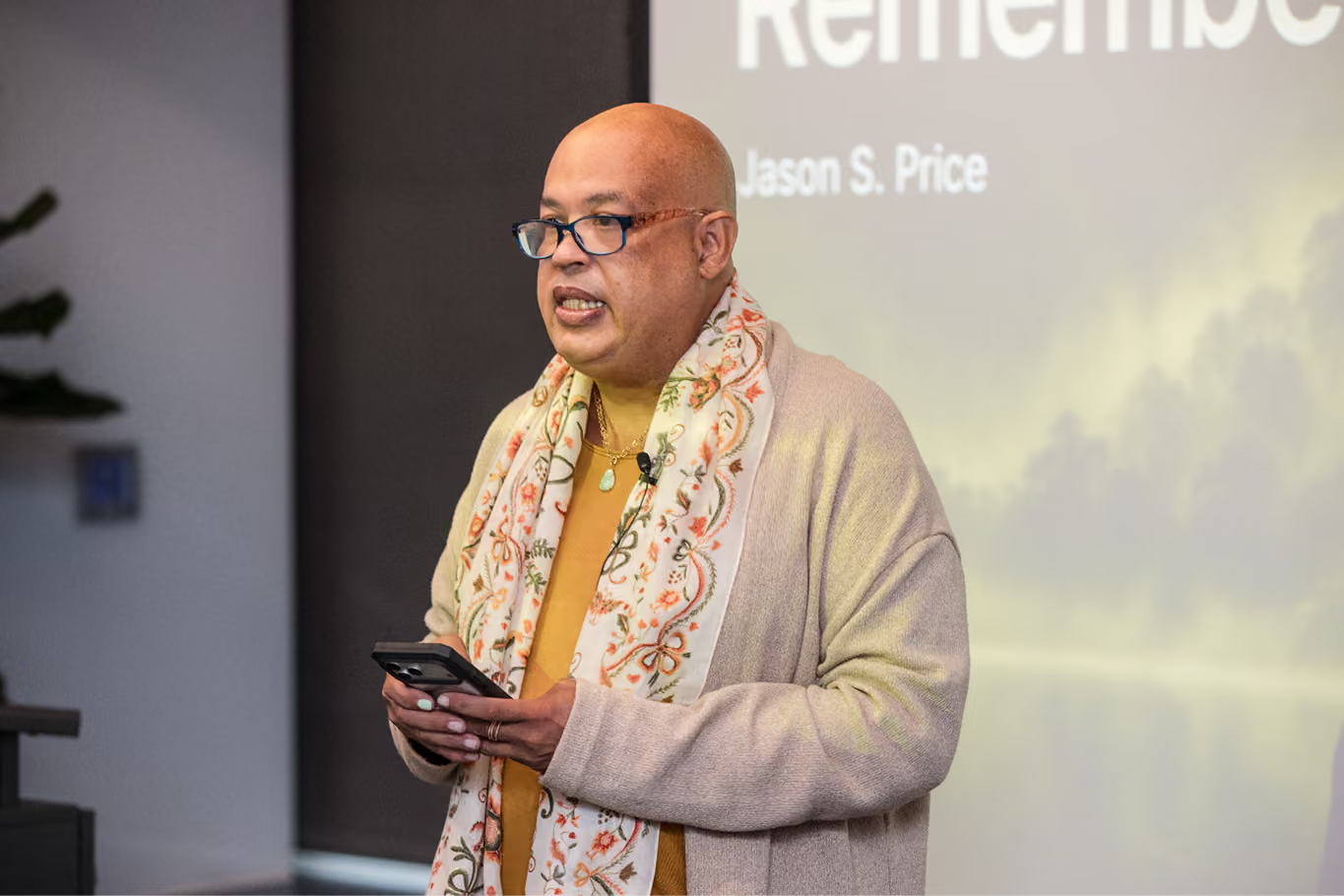
The poem, dedicated to Afro-Caribbean land and a celebration of Belize’s 45th Independence Day, explores Belize’s identity and collective trauma through the legacies of colonialism and slavery, portraying the forest as a living witness and a pathway toward healing, redemption, and reconnection with the land.
Reforestation is Central to Fighting Climate Change and an Urgent Solution for Many Global Crises
Opening remarks from Terraformation President Jad Daley set the tone for the day and the reforestation movement more broadly. He posed a provocative challenge to the room: “What can you give away today?”
In a time where organizations are pushed toward competition, brand differentiation, and “feeding ourselves first,” Daley urged attendees to flip the script and called for radical collaboration. He asked funders, developers, and corporate executives to give away their best ideas, open-source models, capital opportunities, and even candid mistakes so that others won’t repeat them.
Behind that call for generosity is an uncompromising climate reality. Drawing on the latest United Nations Environment Programme (UNEP) report, warming is set to exceed 1.5°C, making rapid emissions reductions and carbon removal essential for any chance of fighting climate change. Reforestation and afforestation are central to a best-case scenario of overshoot and then return: afforestation and reforestation remove 2.2 gigatons of CO₂ annually and have potential to remove 5.6 gigatons annually by 2050. Meeting that ambition means restoring more forests, improving how we restore them, and working in just and equitable partnership with communities.
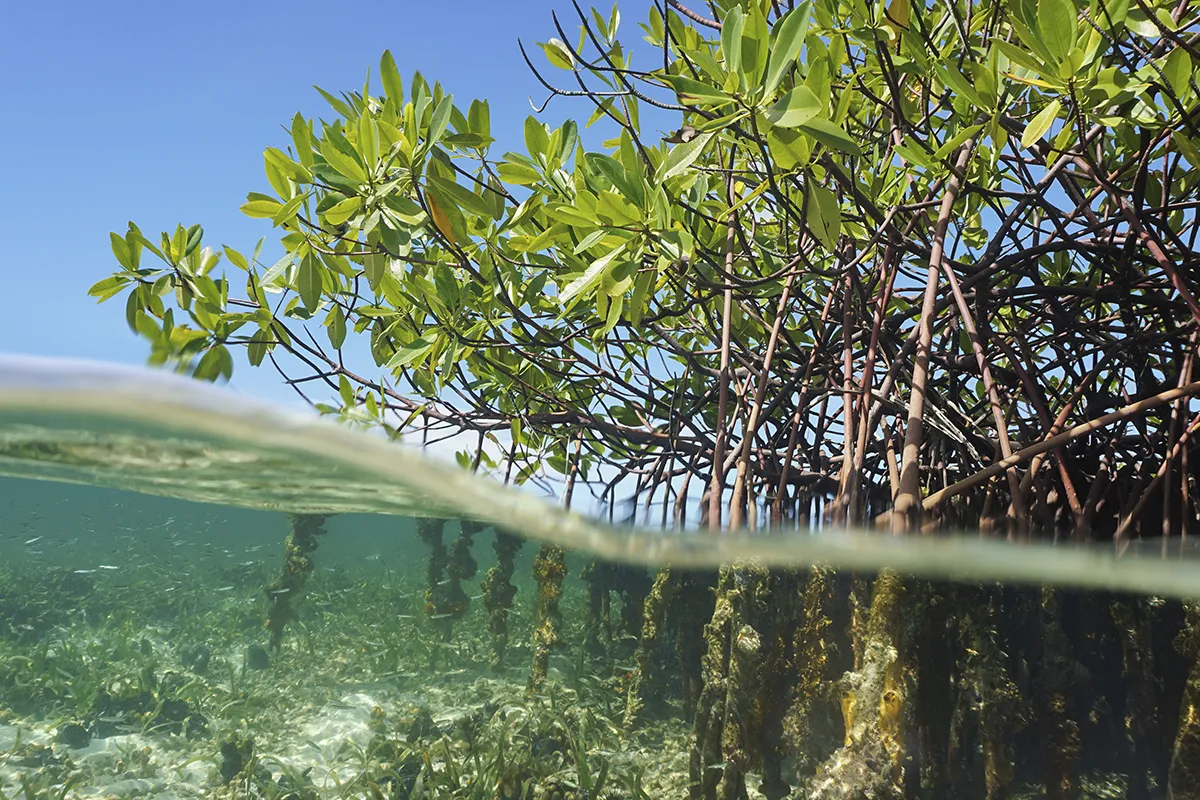
When we do reforestation the right way – guided by science, using native species and working in partnership with local communities – the benefits go far beyond climate. Reforestation can address water scarcity and biodiversity loss, create jobs and support sustainable livelihoods for people around the world, and much more.
The start of a movement
Achieving this level of restoration requires recalibrating the movement to deliver scale, ecological resilience, and community justice together.
“The climate movement cannot win without us. To produce the lasting results that we need in a just manner, we have to reforest for resilience, integrating ancient wisdom and new science to regenerate forests that are built to last.”
— Jad Daley, President, Terraformation
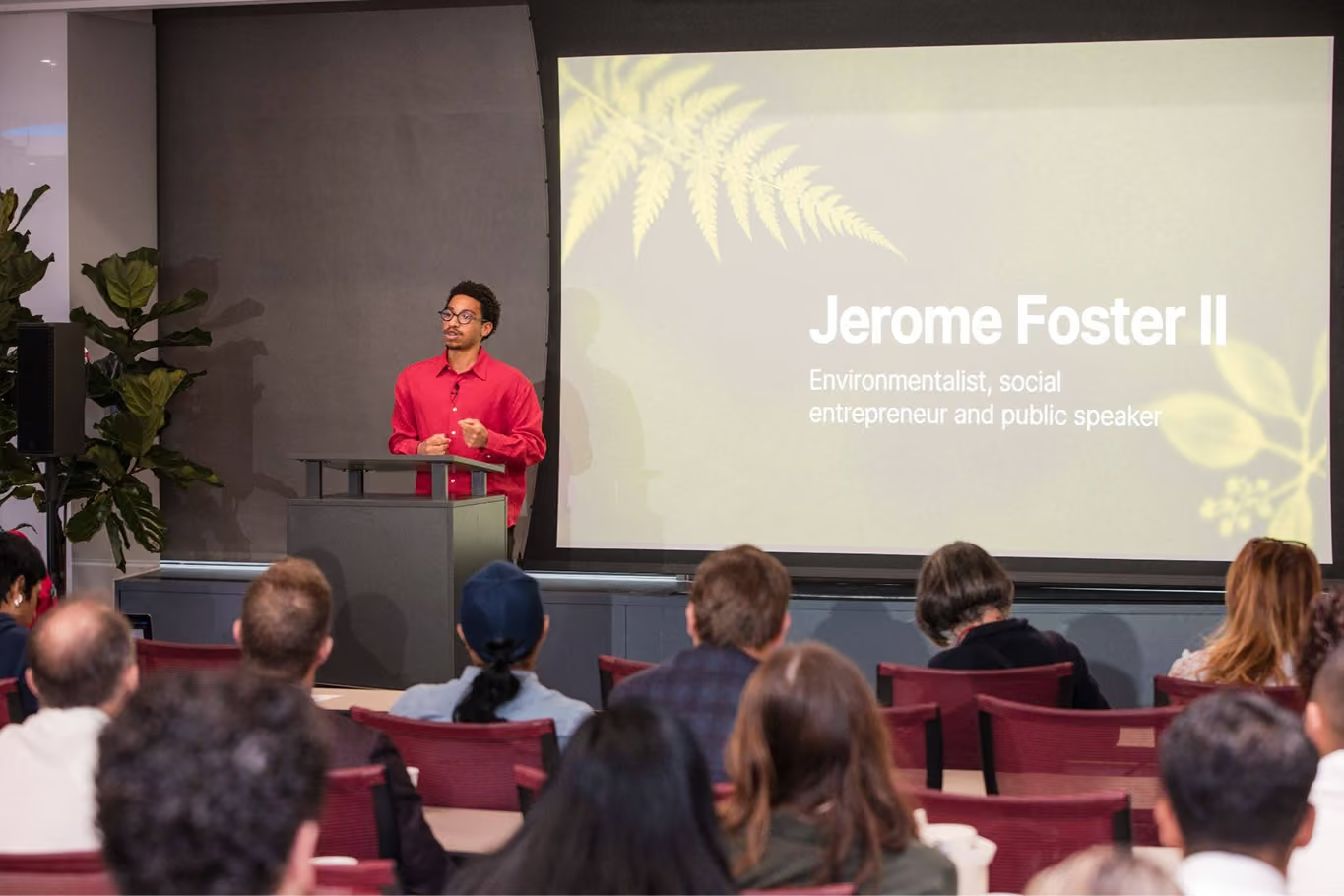
Jerome Foster II, the 24-year-old former White House climate advisor who began advocating for climate at age 15, reminded us that restoration is fundamentally about human connection. He offered a vivid metaphor that captured the spirit of the summit, describing what it feels like to stand beneath California’s giant redwood sequoia trees:
“We look at Coastal Redwoods and see it climbs more than 300 feet tall. Yet, its roots only go about 12 feet deep. But what's incredible about it is that it doesn't fall. It lends its sense of success based on mutual reassurance to […] the nature that's around it. And that's why we're here. Because a movement survives the way a Redwood grove does.”
— Jerome Foster II, Environmentalist, Social Entrepreneur and Public Speaker
Next, Hindou Oumarou Ibrahim, the renowned Mbororo activist from Chad, held up the newly released Planetary Health Check 2026 report. Seven of the nine critical planetary boundaries have now been breached. She urged everyone to truly value nature as it is, not as an asset class waiting to be invested in.
“We are so tired as Indigenous peoples to see a small grant here, a small grant there. They give $5,000 or $100,000, expecting Indigenous peoples to do magic. We are doing this work for free for long [time]. It is time the rest of the world invests in us. We value so much the dead nature. It's time to value the living nature, and that's what Indigenous peoples protect.”
— Hindou Oumarou Ibrahim, Environmental activist
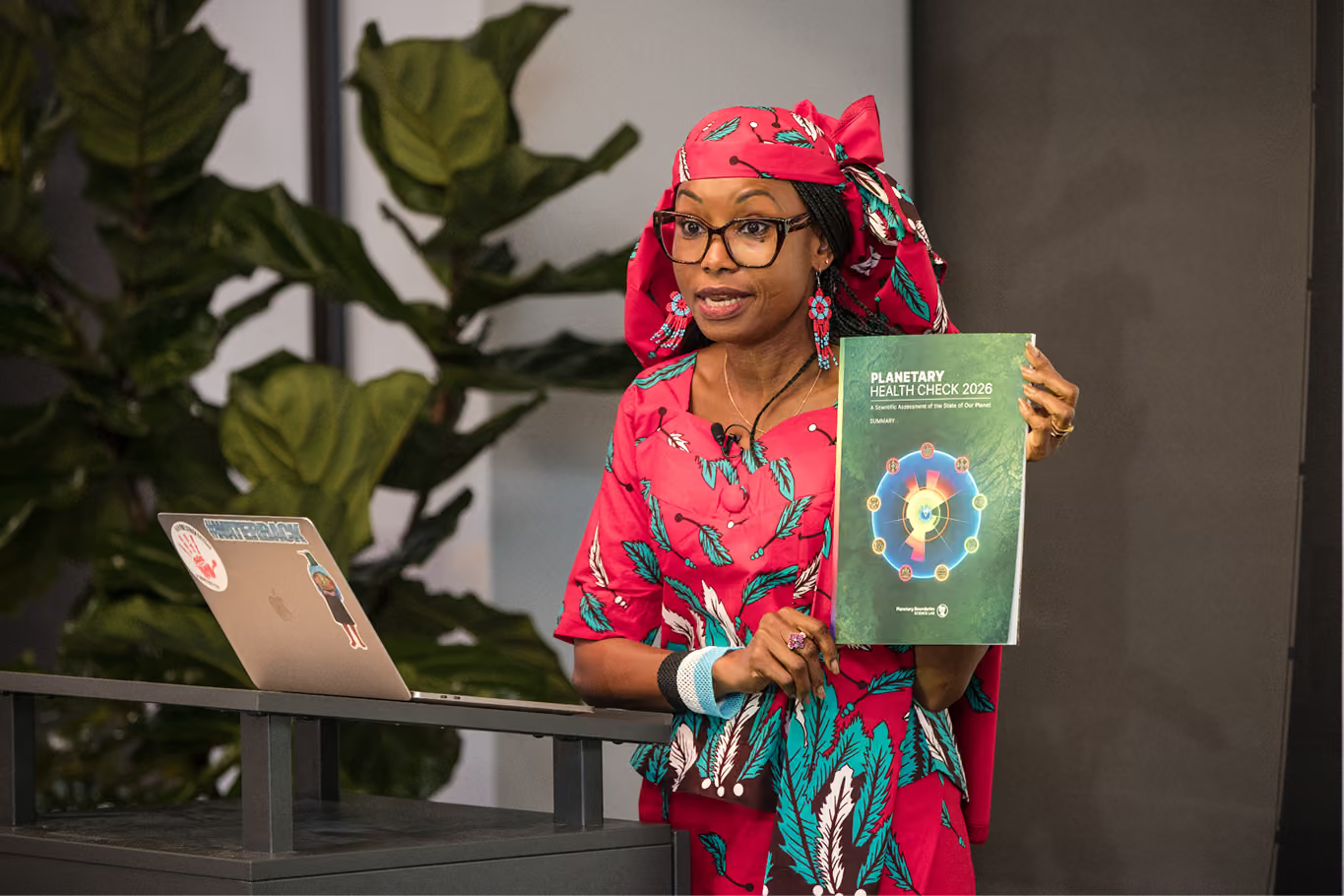
Watch the full intro and keynotes.
The day continued with sessions across three tracks – Finance, Technology, and Communities – followed by closing panels and a short video.
Scaling restoration through country platforms and community ownership
Moving from isolated project islands to continental-scale recovery requires restructuring both governance and local partnerships. A thread woven across the summit sessions was the need for country platforms: nationwide, government-led frameworks that align policy, public spending, and private capital to achieve national restoration goals.
Highlighting national models across Ghana, Ethiopia, and Brazil, speakers illustrated how country platforms streamline data and lower investor risks. Dr. Hugh Brown of the Ghana Forestry Commission described the challenge of tracking reforestation progress across forest reserves, farms, and mangroves, and how a country platform could bring stakeholders together to improve monitoring, strengthen governance, and mobilize resources.
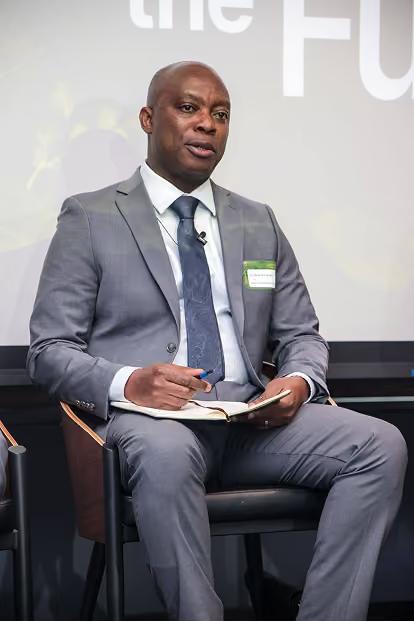
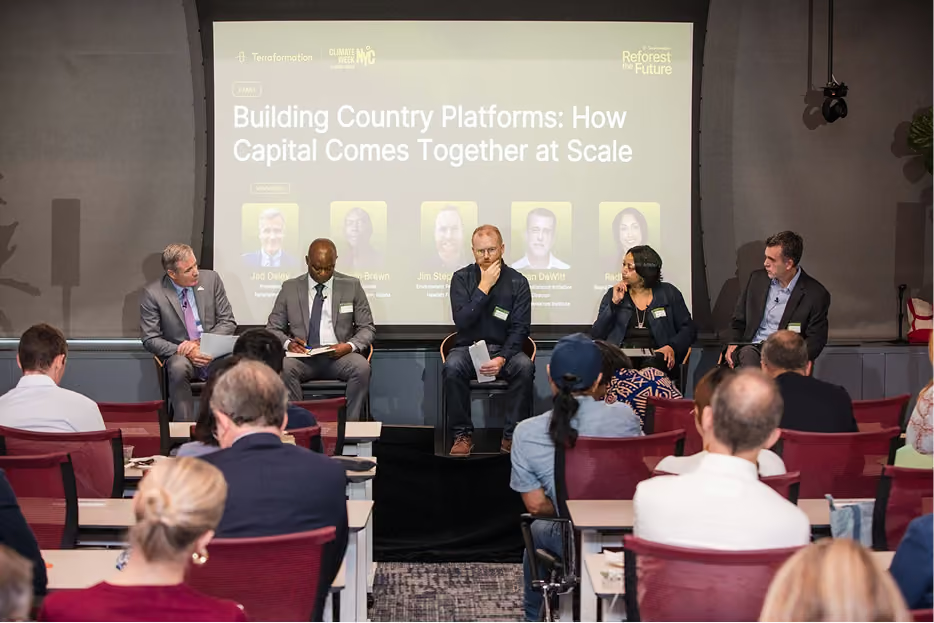
Watch the full discussion: Building Country Platforms to Scale Reforestation
As speakers across the Communities track emphasized, durable restoration depends on clear rights, meaningful community influence, and approaches grounded in local relationships to land, nature, and one another. Steven Nitah of Nature for Justice detailed how the Łutsël K’e Dene First Nation established Thaidene Nëné in Canada through a co-governance agreement that holds equal veto power alongside Canadian government entities, backed by a $30 million community-owned trust fund.
Insights from Namati and Nia Tero underscored that securing customary land rights, meaningful FPIC, community-defined representation, benefits shaped by communities’ own priorities, and participatory tools and technical support that keep communities at the center of long-term stewardship and monitoring are prerequisites for durable forest recovery.
Featured film: In eastern Cameroon as part of the Iroko Restoration Project, this short film explores the groundwork required for durable restoration before planting begins.
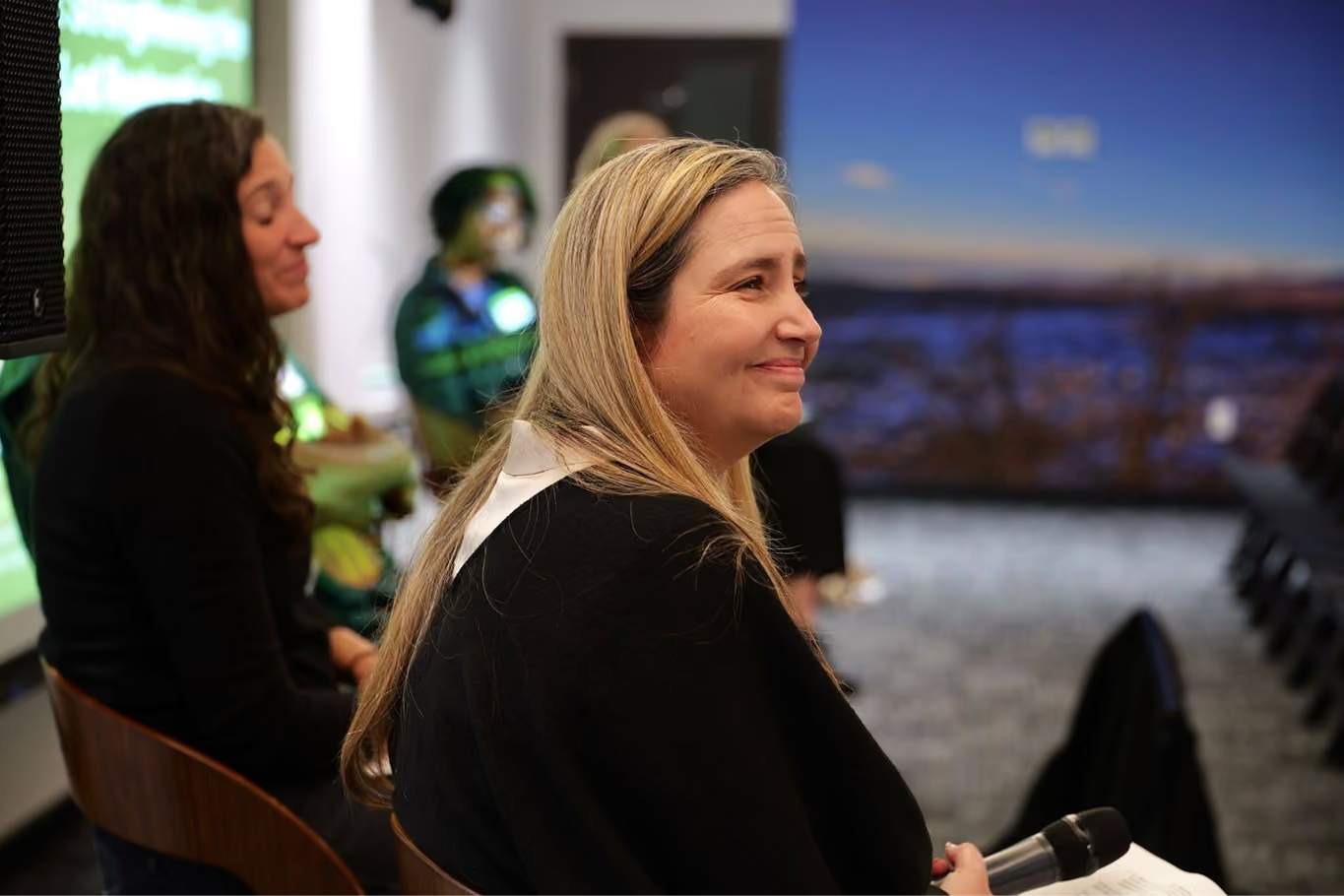

Watch the discussions from the Communities track:
Field realities and modern tech for tools & tech, and unlocking capital for finance
In the Technology and Finance tracks, practitioners tackled the operational and market bottlenecks that hinder large-scale implementation.
Panelists shared candid field lessons, from extreme weather in Hawaiʻi to managing unpredictability. They reminded the audience that ecological restoration requires humility, adaptive management, and multi-decade time horizons. To support practitioners on the ground, digital monitoring, reporting, and verification (dMRV) tools are stepping up.
Breakthroughs presented at the summit included:
- Farmers for Forests: Open-source AI platform TreeLens analyzes drone imagery to map individual trees and young saplings, measure tree height and canopy size, and estimate carbon sequestration, supporting transparent monitoring and smallholder access to philanthropic and carbon finance.
- Kanop: Satellite data and AI support biomass measurement, carbon accounting, and dynamic baselines, with auditable data and technical support throughout project development and verification. Its data has been vetted by Verra for VM0047 and is provided to Isometric for its nature-based protocols.
- NatureMetrics: Environmental DNA (eDNA) collected from water or soil samples can reveal which species are present in an ecosystem, offering a more complete picture of ecosystem health than visible canopy cover alone.
Watch the full discussions:
- Technology and Monitoring: Raising the Bar on What We Measure
- Lessons from the Field: Challenges, Failures, What Works
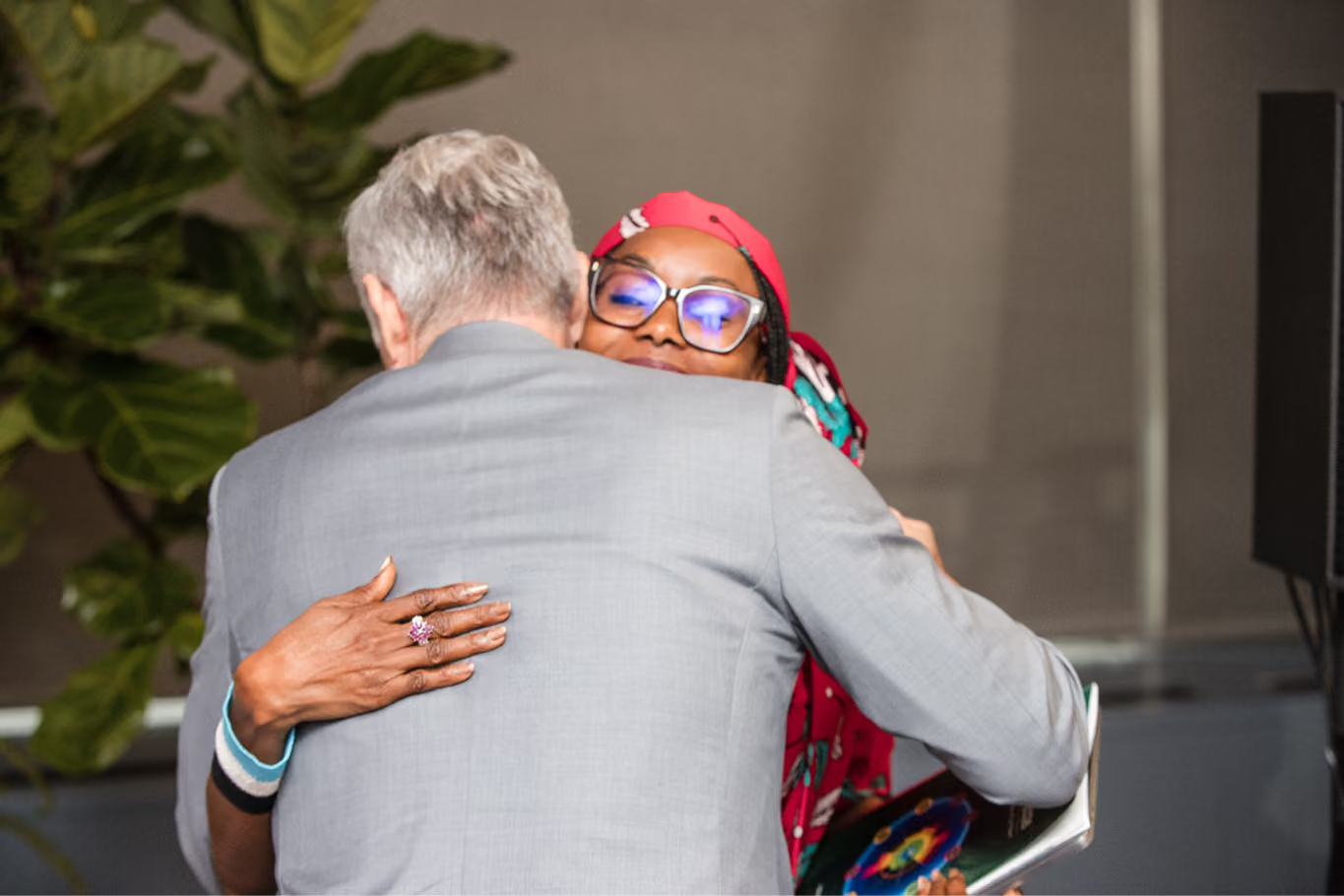
While dMRV tools build scientific rigor, technology at the summit also served as a bridge for emotional connection. A new virtual reality experience, generated from simple smartphone field scans, lets attendees walk through 3D recreations of restoration sites at Terraformation’s project sites in Hawaiʻi. At the end of the demo, one participant took off the VR headset, thanked us for the experience, and hugged one of our teammates, Jennifer Yim, who ran the demo. This moment allowed us to showcase what’s possible with technology in restoration and revealed how much people value their connection to the forests they help support.

In the Finance track, experts explored a central chicken-and-egg problem: restoration projects need early funding to demonstrate readiness, while investors often want committed buyers before providing capital. Coalitions like the Symbiosis Coalition are helping bridge this gap by bringing corporate buyers together through long-term offtake agreements that can unlock larger investments. Panelists emphasized matching capital to each stage of development, establishing shared quality standards, and recognizing the value of biodiversity and community outcomes alongside carbon.
Tim Christophersen of Salesforce further urged stakeholders to view nature as infrastructure, highlighting how rewetted peatlands and urban sponge cities are already attracting billions in investment beyond carbon markets.
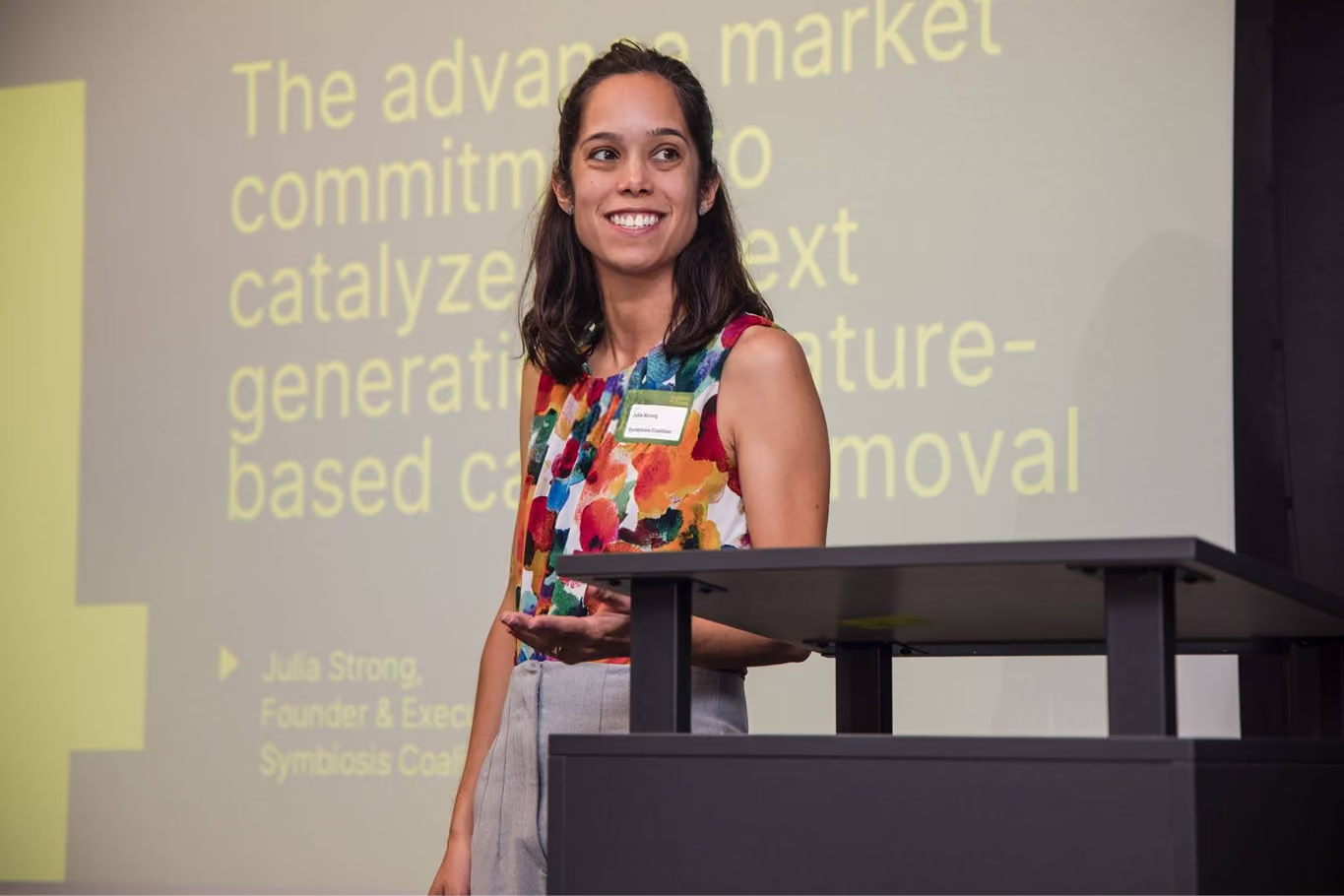
Watch the full discussion: What’s Landing on Funders’ Desks
More from the Finance and Tools, Tech and Training tracks:
- From Seed to Forest: What Thorough Reforestation Requires
- Unpacking Forest Finance: A Live Cross-Sector Exchange
What we commit to, together
Florent Kaiser, CEO of Global Forest Generation, and Constantino “Tino” Aucca Chutas, the Quechua conservation leader and co-founder of Acción Andina, joined Jad Daley for closing remarks.
In an unscripted moment, Tino stepped up to Jad Daley, unwrapped a woven traditional Andean scarf and placed it around Daley’s shoulders.

“In the Andes, the scarf that people wear is not only a gift, it is a commitment. It is a commitment to the greater good, it is a commitment to keep doing what you're doing.”
— Florent Kaiser, CEO of Global Forest Generation
Daley graciously accepted the scarf and reaffirmed Terraformation’s pledge to show up as a service leader for the global restoration movement:
“We want to be a voice for the movement and work with you on telling the story. We want to feed this whole ecosystem of partners with innovation. We want to do capacity building with you in the most collaborative way, from supporting individual organizations to building country and regional platforms. And yes, we want to do landscape-scale reforestation with you on the ground."
— Jad Daley, President, Terraformation
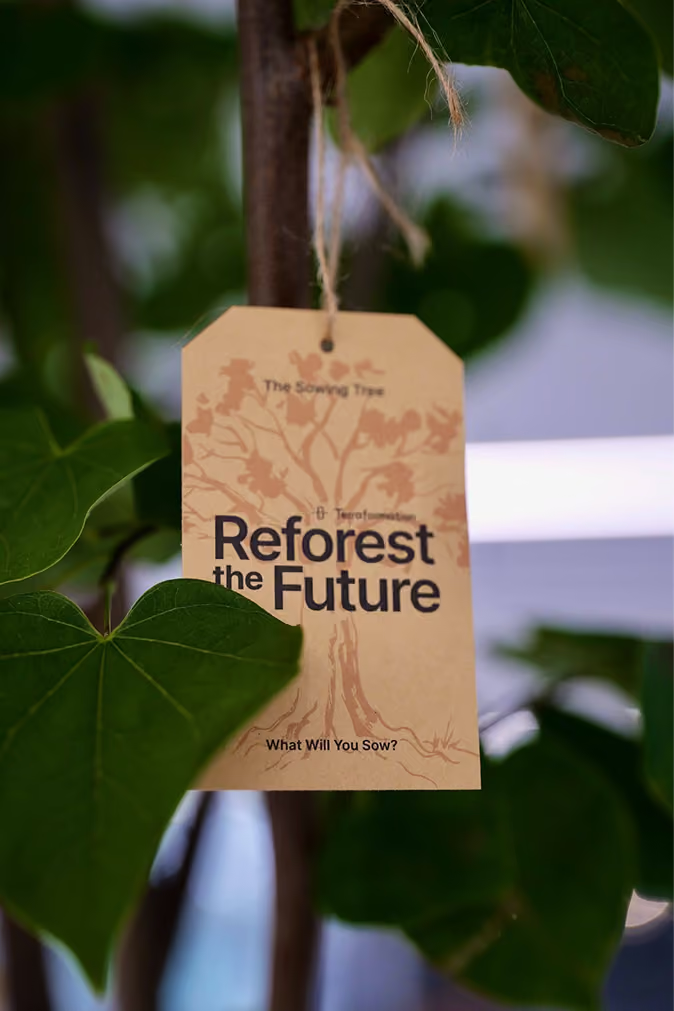
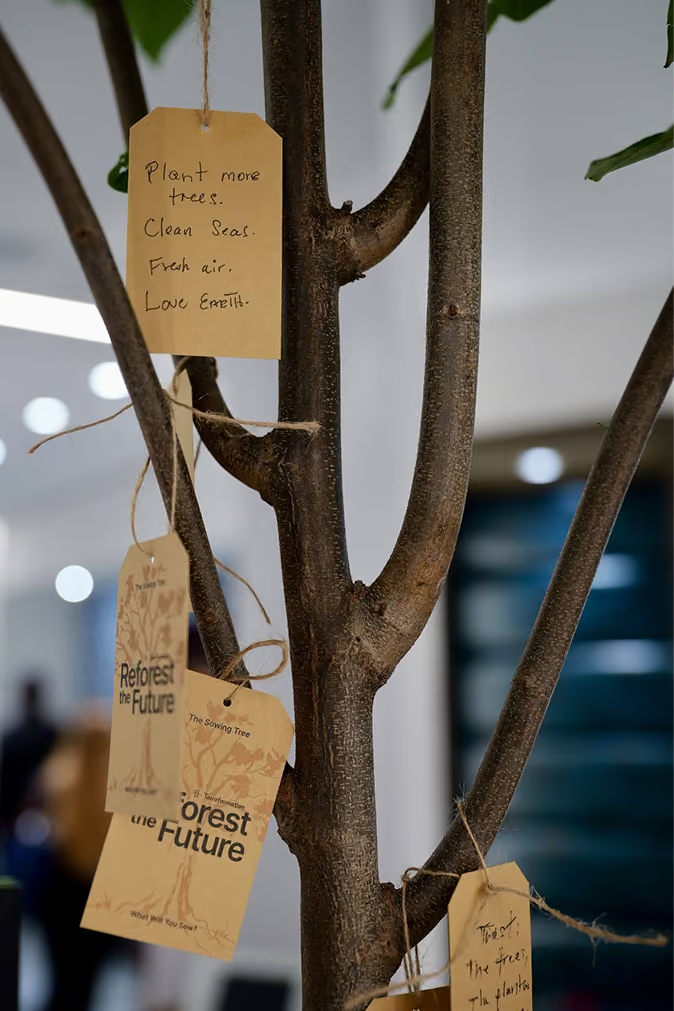
Our Reforest the Future Summit marks the beginning of building a movement to turn reforestation’s potential into action at the scale the world needs.
Watch the closing: Ecological Literacy and the Global Restoration Movement
Keep the momentum going
Find all session recordings on our YouTube channel. Whether you’re a forestry practitioner, represent a corporation or philanthropy, or are an individual passionate about reforestation, start here to explore a partnership opportunity.
Subscribe to The Understory, our podcast featuring candid conversations about the future of nature restoration, and sign up for our newsletter to receive the latest stories, insights, and updates from the field.
Follow Terraformation on social media:
- LinkedIn: Terraformation
- Instagram: @globalterraform
- X: @TF_Global
- Facebook: Terraformation
And to go deeper on any of the above, reach out: info@terraformation.com.
Let’s bring forests back to life. Together.
Thank you to event media partner We Don’t Have Time.