
Hot Takes from a Record-Hot London: Climate Action Week 2026

A dispatch from London Climate Action Week 2026: where the pavement hit 134°F and the urgency matched the moment.
London hit 37.3°C (99°F) on June 26, the final day of London Climate Action Week and the hottest June temperature ever recorded in the UK. Thermal cameras caught central London pavements at 57°C (134°F). Piccadilly Circus. Oxford Street. Regent Street. All scorching underfoot as thousands of climate professionals moved between venues. A panel on extreme heat was cancelled due to extreme heat. The irony was not lost on anyone.
The temperatures experienced throughout the week reinforced why restoring forests matters—not only for carbon and biodiversity, but also for climate resilience and protecting communities from the impacts of extreme heat.
Trees can lower air temperatures and make it feel up to 14°F cooler. Nature's air conditioning, free of charge, is systematically underfunded and underplanted. We spent the week exploring how to build systems that value nature for the services it provides—cooler temperatures, healthier soils, cleaner air, disaster resilience, biodiversity, and more—not just for what we can extract from it.
The following captures what we hosted, voices that moved us, what the week revealed about reforestation, and resources worth diving into.
What We Brought to LCAW
Across the week, Terraformation convened leaders from government, philanthropy, finance, business and civil society to explore the partnerships, systems and financing needed to restore landscapes at scale.Terraformation hosted three events: a roundtable, a podcast recording, and an evening gathering at one of the world's most iconic financial institutions. Here's what happened.
June 22 | The Investability Gap Roundtable
TLDR: The discussion emphasized that nature restoration needs a infrastructure-like financing model, where early, risk-tolerant capital enables projects to mature into investable assets.
We convened 29 practitioners, investors, developers, and NGO leaders at the historic Guildhall for a candid conversation: Why Capital Isn't Reaching Reforestation.

What we heard:
The market isn't built for nature yet. Unlike tech for example, where capital flows through staged rounds from VCs to upstream investors with different risk tolerances, the nature space lacks that infrastructure. Early-stage feasibility work, the essential foundation before any project gets off the ground, can cost up to $5M, but funding designed for this phase rarely matches that reality.

The conversations reinforced that the challenge goes beyond attracting more capital. Finance alone is not enough. Scaling restoration also requires practical systems on the ground: seed banks, nurseries, technical assistance, restoration capacity and long-term community partnerships. And solving it requires exactly the kind of cross-sector, honest dialogue we had in that room.
Through our Seed to Forest Accelerator, Terraformation is helping build the next generation of restoration projects by providing the expertise, systems, and financing pathways needed to scale. Interested in learning more? Contact impact@terraformation.com.
June 23 | The Understory Podcast
TLDR: The people closest to the climate crisis are the least resourced to respond to it. That has to change.
The next day, we took the stage for a live recording of The Understory, Terraformation's podcast series co-hosted with We Don't Have Time. The episode's premise was simple and pointed: most people at LCAW don’t represent the people most affected by climate change.
- 90% of climate science is published in English. 80% of the world doesn't speak it.
- Half the world is under thirty, yet less than 1% of climate philanthropy goes to youth-led organizations.
- The people closest to the climate crisis are the least funded and resourced to respond to it.
Our guests were Samrah Khan, Chief of Staff for Climate Cardinals — one of the world’s largest climate education organizations, now in its fifth year translating climate science across 105 languages — and Zainab Bie of Equal Right, whose organization is pioneering unconditional cash transfers as a tool for climate justice.

Zainab spoke on who's missing from rooms like this one: "Young people are always invited as victims in this space. But young people are never invited as experts." And on what Gen Z brings that older generations have lost: "We don't limit ourselves. That's why we have this sense of: I can go to the moon tomorrow."
Tim Christophersen, VP of Climate Action at Salesforce and author of Generation Restoration, also weighed in on youth at our London Stock Exchange event the following day: "The role of youth is to be a disruptor and we have to invite them in to be that disruptor. They say, well this ain’t working. And just because we've done it this way for 50 years is absolutely of no interest to me."
Hear the full conversation and more discussions with the people shaping the future of nature restoration on The Understory: terraformation.com/the-understory.
June 25 | Growing the Future at the London Stock Exchange
TLDR: Ghana is living proof that a country-platform approach to reforestation works. The conditions for reforestation at scale exist. What’s missing is the urgency and will to act.
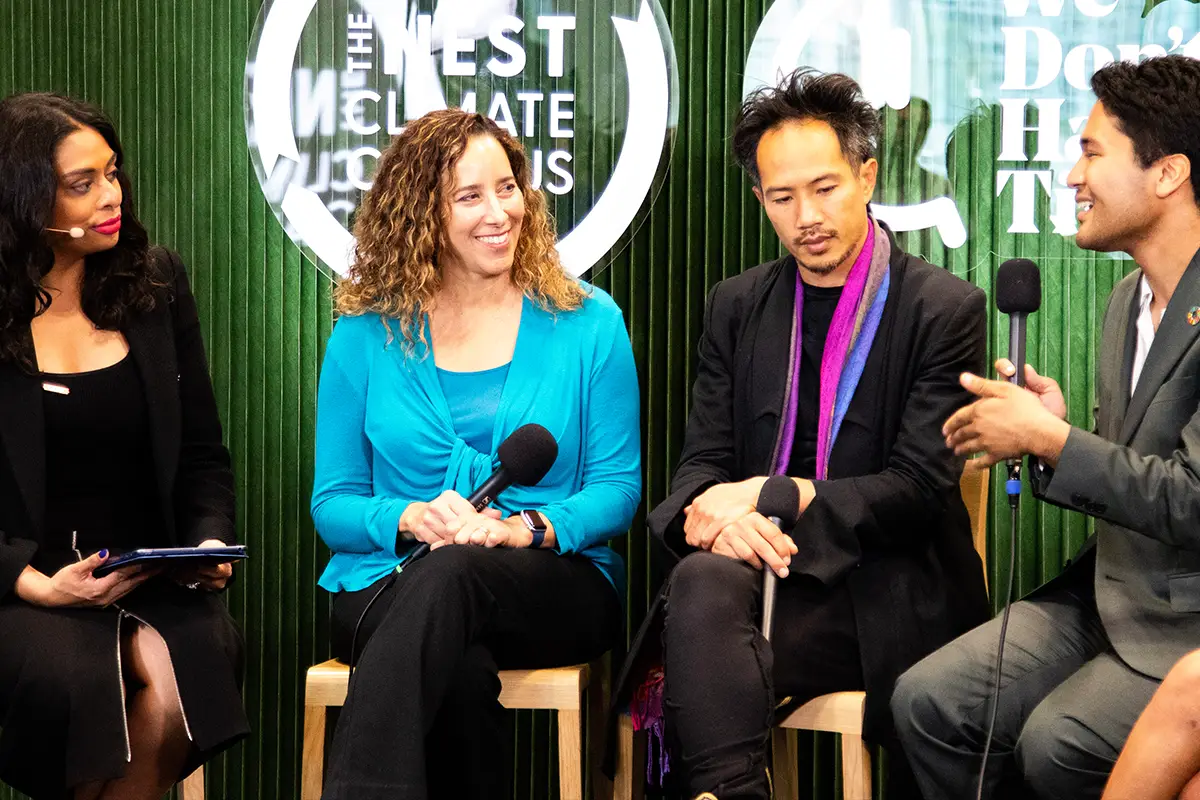
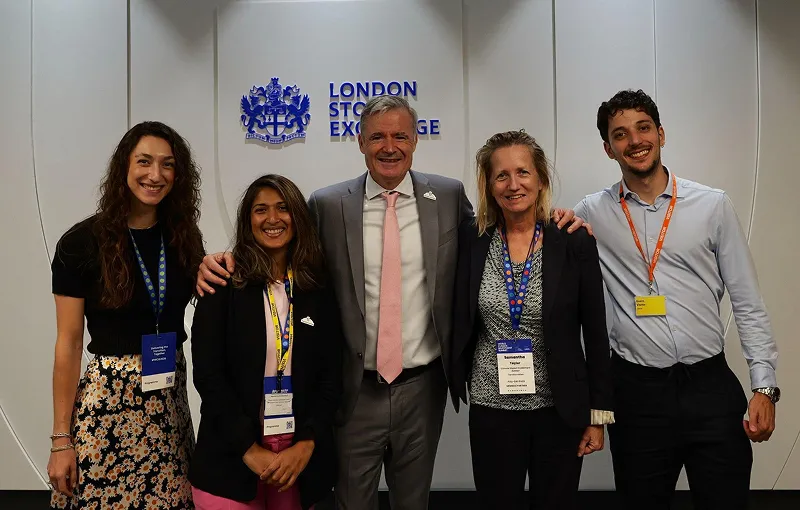
Our marquee event of the week. A warm evening at the London Stock Exchange, where Terraformation brought together leaders from across the reforestation ecosystem for a panel and fireside chat: Growing the Future: Where Forests, Climate Action & Funding Converge.

The conversation went deep on what a country-platform approach to reforestation actually looks like, using Ghana as a living proof point. Dr. Brown shared how Ghana’s government policy, restoration infrastructure, community participation and private investment align around a common national vision. Rather than isolated projects, the discussion pointed to the value of building country-wide platforms that create the conditions for restoration at scale.
Dr. Brown walked the room through 24 years of policy evolution: how Ghana changed laws to allow private sector participation in reforestation within forest reserves, introduced a community benefit-sharing model where farmers receive a 40% stake in the final tree crop ("that did the trick"), and became the second country in the world to issue collective licenses for timber export to the EU. "I think government's duty is to create the enabling environment," he said. "There is no problem that can be solved if you work together and sit around the table."
Jamey Mulligan, who described himself as "a worried buyer" in a carbon market that still doesn't have enough of them, called on corporations to think beyond transaction quality. Buyers should think of their capital as a catalyst with a multiplier effect that extends past any single project boundary. That shifts the question from “is this [carbon] credit valid?” to “what can this investment unlock?” His call to action for other corporations: “Just get in the game.”
Helen Ding described WRI's restoration economics work spanning from satellite-level data all the way down to hyper-local community practice. The macro argument is clear. The micro pathways exist. What's missing is urgency: the sector cannot wait another decade for perfect conditions that will never arrive. “We’re running out of time.”

The fireside chat with Tim Christophersen went to places I didn't expect. He challenged us to move beyond carbon finance as the organizing frame for forest investment. "It's absolutely puzzling why we started with carbon in this whole discussion. Everything else is much clearer. Water, food." He described our current relationship with nature as abusive, not by intention but by ignorance. "We take all of nature's ecosystem services, but we don't give anything back. And if you do that in any kind of relationship, that relationship ends at some point in time."
Voices That Moved Me
No dispatch from this week would be honest without acknowledging what happened beyond the finance panels. The Rights and Nature Hub at LCAW carried a different energy: older, deeper, harder to quantify, and at its essence, purely human.

Puyr Tembé, the first Secretary of State for Indigenous Peoples of Pará in the Brazilian Amazon and co-founder of ANMIGA, stood at the front of a packed room and said: "The climate crisis is not just an environmental crisis. It's a crisis of forgetting. We forget we are part of the same web of life we are destroying... A future we build has to be built on connection, not extraction."
She was followed by Nina Gualinga, Casey Camp-Horinek of the Ponca Nation, and Osprey Orielle Lake, women who named, without flinching, the through-line between extractivism, colonialism, and the degradation of both land and women's rights. It was real and deeply human.
The Rights of Nature movement also had a real presence this week. Filmmaking of Ecuador's experience giving nature constitutional rights, the UK Nature's Rights Bill and the Earth Law Center's work on behalf of the 74 remaining Southern Resident orcas all pointed toward a legal and cultural transformation that values conservation over extraction.
If Not Us Then Who?, the organization training indigenous filmmakers and storytellers to tell their own stories, brought something into the room that data alone cannot: glimpses of hope and deep tragedy from the front lines of the world’s most precious ecosystems.
What the Week Revealed About Reforestation


- Shift from projects to platforms, competition to collaboration. Instead of organizations competing as separate players each pushing their own projects, country platforms bring governments, project developers, and funders into one shared structure built on enabling conditions, capacity building, and real collaboration.
- Finance is one of the enabling-conditions (next to law and policy). It’s not just about more capital; it’s about enough money, and the right kinds of money, blended in the right ways. The BCG + GFANZ + BII report released at LCAW is a practical structuring guide for fund managers. One case study — the Allianz Credit Emerging Markets Vehicle — reached a $690M first close in January 2026, with $150M in concessional capital structured to mobilize $850M in senior investment from insurers and pension funds.
- The permanence debate is burning the house down. Tim Christophersen: "It's a bit like two fire brigades arriving at your burning house, one with water and one with foam, arguing over which to use." The engineered-vs-nature carbon standoff is blocking billions. We can’t let perfection be the enemy of good. We need to act.
- Agricultural subsidies are the biggest lever nobody talks about. For every dollar invested in nature, $30 is spent destroying it, much of it government money. The EU alone spends €40B per year through the Common Agricultural Policy. "It's fashionable to say governments don't have money," said Tim. “They do. It's just pointed [in] the wrong direction.” While policy shifts and global markets slowly evolve, early-stage philanthropic and catalytic capital remains vital to keep projects moving on the ground.
Resources Worth Your Time
- Generation Restoration by Tim Christophersen · Pick it up. Seriously.
- Scaling Blended Finance II · Released at LCAW
- The leading role of Brazilian forests in the global climate agenda · 200+ contributors, released at LCAW
- If Not Us Then Who? · Indigenous storytelling and filmmaking
- State of Private Investment in Nature, 2026 · The Nature Conservancy x Forest Trends Report
- Becoming Nature Positive · Open access book and 30-minute film
About Terraformation
We came to London as conveners, learners, and advocates. Terraformation is a mission-led organization working where we are needed most. Not where it's easy. Our active projects span Ghana (Keta Lagoon Blue Carbon), Colombia (Sembrando Futuro 2.0), the Congo Basin in Cameroon (Iroko Restoration), and Hawai'i. We were founded in 2020 through the vision and commitment of founder Yishan Wong, and have planted 5.4 million trees and deployed 19 seed banks.
Stay Connected
Want to keep up with what we're learning, building, and exploring?
Subscribe to The Understory, our podcast featuring candid conversations about the future of nature restoration, and sign up for our newsletter to receive the latest stories, insights, and updates from the field.
Follow Terraformation on social media:
- Instagram: @globalterraform
- X: @TF_Global
- Facebook: Terraformation
- LinkedIn: Terraformation
And to go deeper on any of the above, reach out: info@terraformation.com.
We'll be in New York in September and making noise all the way to COP31.
London isn't just calling. It's cooking. And it's time to act like it.