.png)


Restoring Mangroves and Livelihoods in Ghana's Keta Lagoon
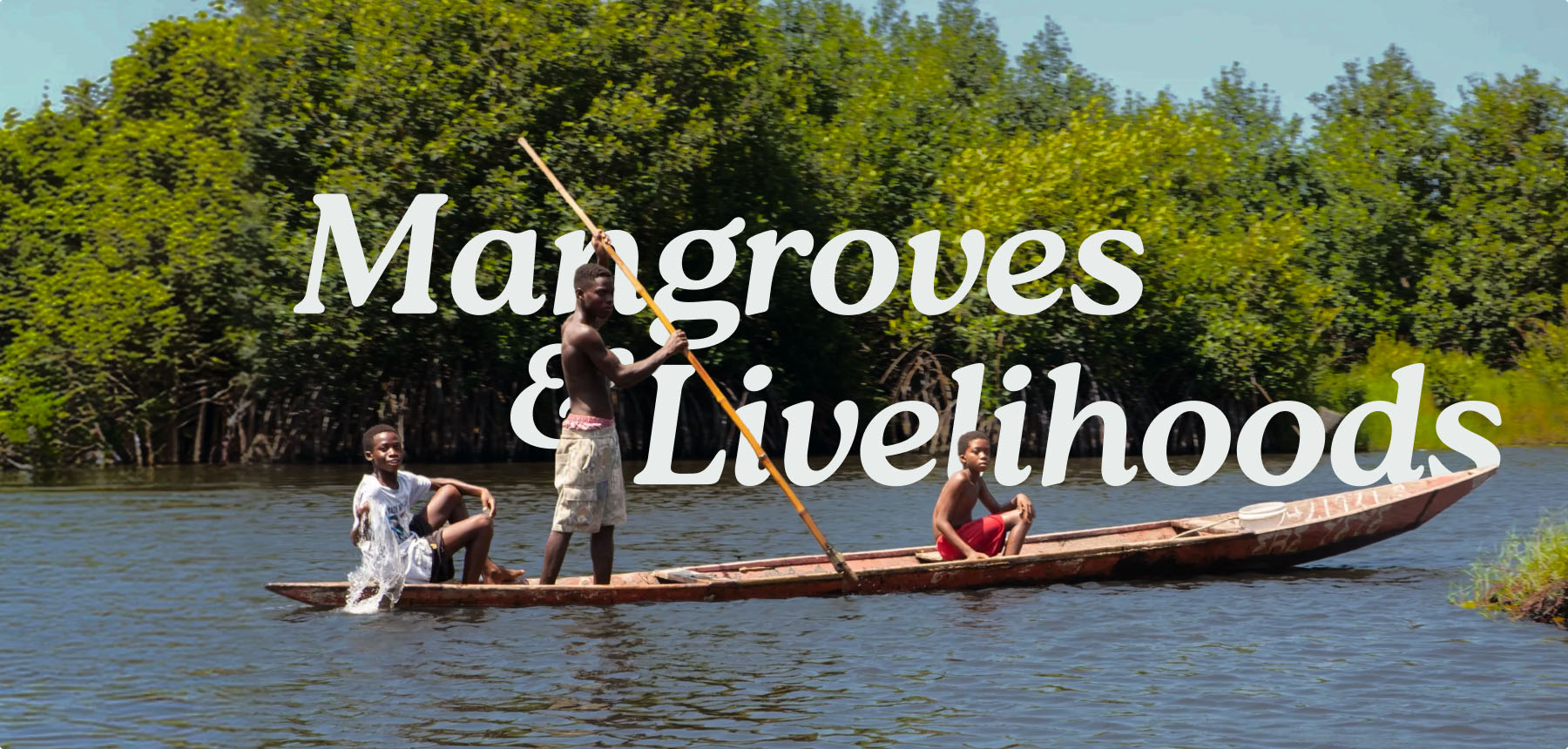
The true value of mangrove forests is measured not only in carbon, but in the communities and ecosystems they sustain.
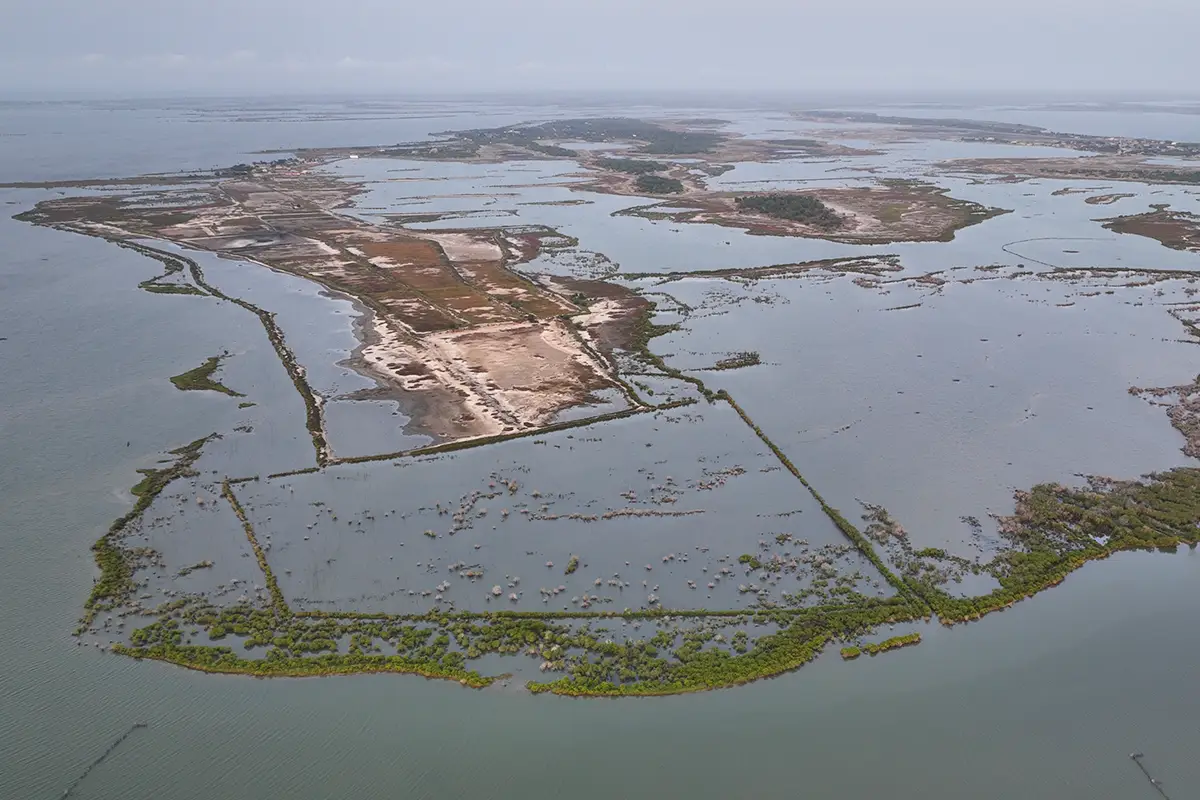
"You used to be able to see the bottom," said an elder in Aflorto, a small community on Ghana’s coast, while pointing to a channel now choked with reeds. "Fish moved through it freely." Mangroves used to line the banks, holding the sediment in place and supporting the livelihoods of everyone who depended on the lagoon.
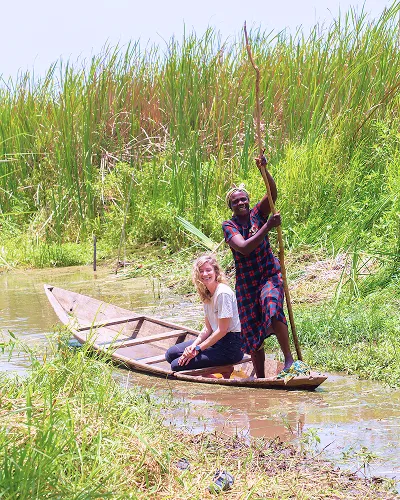
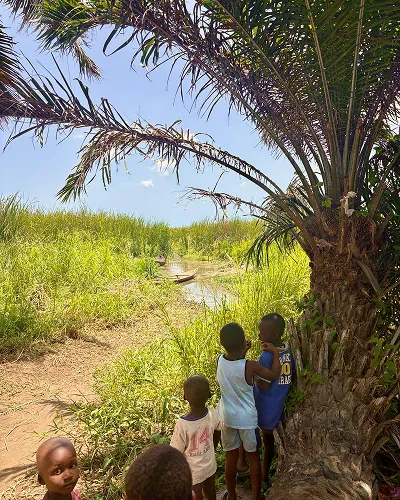
Within a single generation, channels have silted up, mangrove cover has thinned, and fish have become harder to find. The children standing beside the reeds have grown up knowing this landscape as it is now, not as their elders remember it.
On World Mangrove Day, this is a story about what happens when a coastal system unravels — and what it takes to help it recover.
A living, working landscape
Restoring these communal waterways and the mangrove ecosystems of the Keta Lagoon Ramsar Complex is the focus of the Keta Lagoon Blue Carbon Project ("Keta Blue"). For the first phase of this project, initiated in 2023, Terraformation is working with local partner Regenerative Development of Anlo Wetlands (ReDAW) and the communities of Atito, Aflorto, and Fiaxor. Local partner Agrointroductions will begin the second phase of the project as early as 2027.
The Keta Lagoon is a living, working landscape. People catch and smoke fish here, harvest reeds, collect periwinkles (small shellfish gathered for food and income), graze cattle, and raise children beside the lagoon.
These daily uses create pressure on the mangrove ecosystem. They are also the reason restoration matters. As mangrove cover thins and waterways silt up, the lagoon provides less of what communities rely on: fish habitat, shoreline protection, water filtration, and wood for daily needs. That creates a difficult cycle: the more degraded the ecosystem becomes, the fewer options people have, and the more pressure falls back on the remaining mangroves.
Today, wood harvesting, cattle grazing, fires, and shifting rainfall add stress to the mangrove ecosystem. In some places, channels are blocked by sediment, reeds and human-made structures, preventing water from moving freely through the tidal landscape. This can leave soils too salty, too dry, or too stagnant for seedlings to survive.
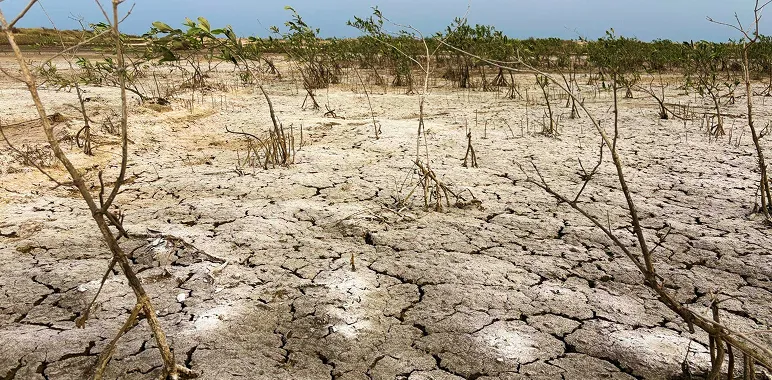
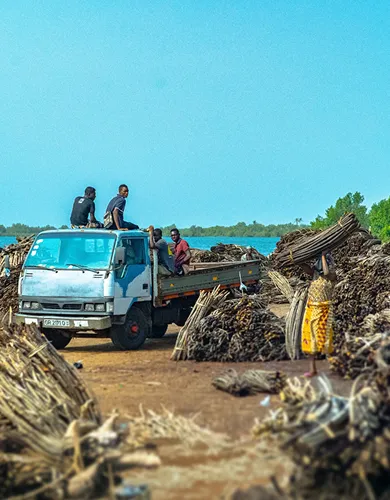
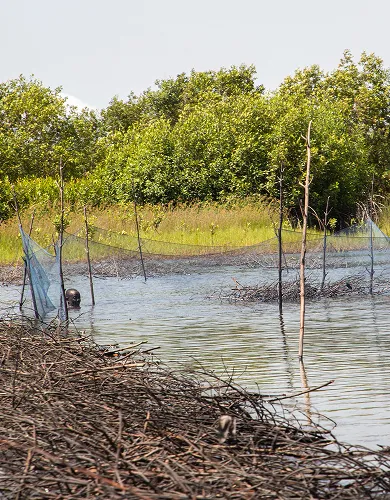
None of these pressures are malicious. They are the accumulated result of poverty, limited alternatives, and people making daily choices with what is available to them. Many community members are keenly aware of this cycle — years of struggling to find enough fish in the lagoon have made it clear. In Fiaxor, one resident put it simply: protect the mangroves now, and there will be more fish later, for them and their children. Restoration builds on knowledge like this, helping to explain what young mangroves need to survive: water movement, the right species in the right place, and protection from cutting and trampling.
How restoration works
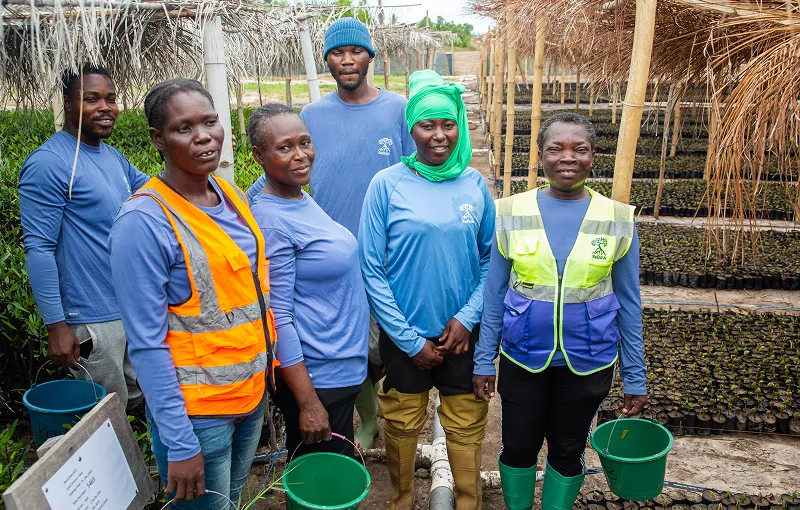
Restoration starts long before a seedling goes into the ground. It begins with collecting seeds and propagules (dart-like seedlings of a mangrove), growing them in nurseries, selecting sites, matching species to the right conditions, and preparing planting areas. This work depends on local community members who know the flooded channels and dry areas, and can identify sites where seedlings are likely to fail or succeed.
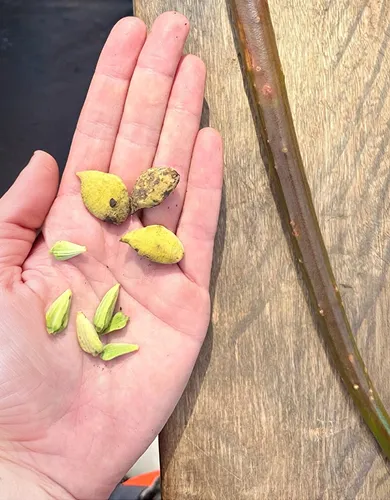
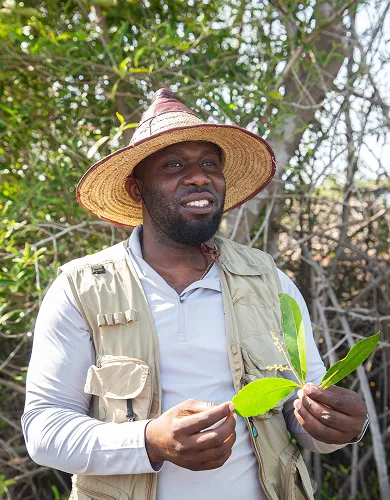
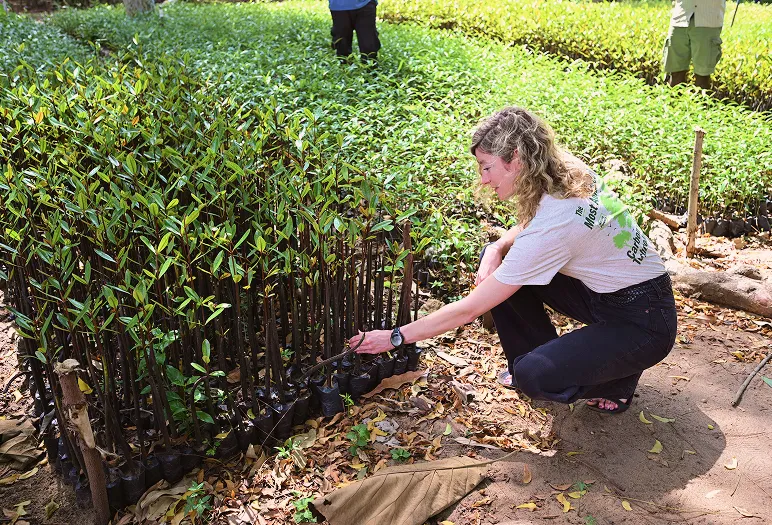
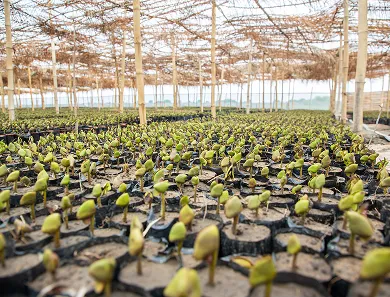
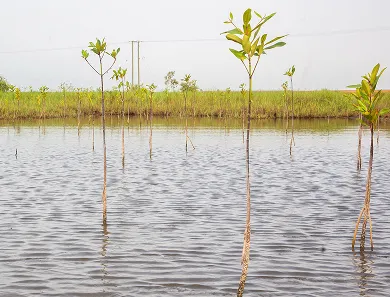
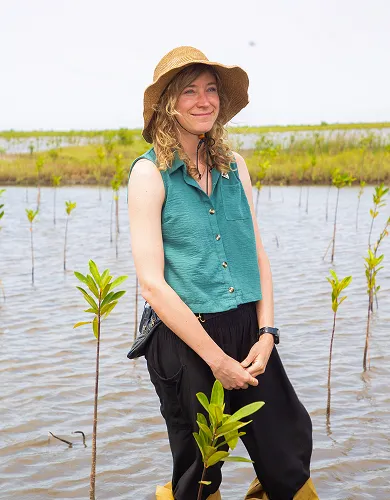
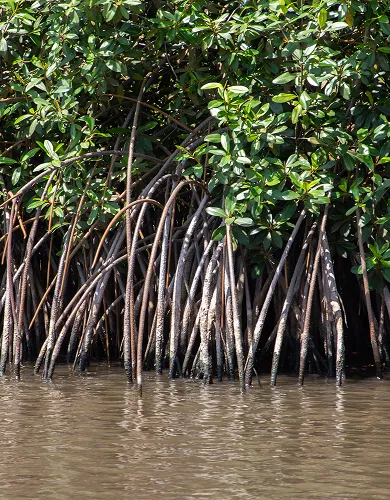
In Atito, where teams started planting in 2024, young mangroves are already setting their characteristic prop roots into the lagoon sediment — roots that stabilize shorelines, slow currents,, and create sheltered habitat for fish, crabs and other aquatic life. It is one of the most concrete things you can observe in this work: a system beginning, slowly, to rebuild itself.
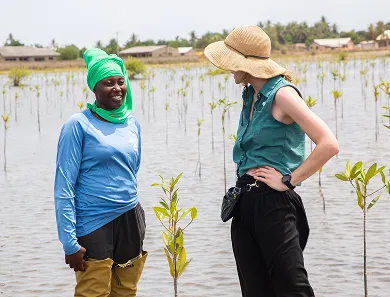
It’s easy to use shorthand terms like “alternative livelihoods,” “benefit sharing,” and “community engagement” to describe the impact of this mangrove restoration work on local people.
On the ground, the impact is much more transformative. If a family depends on mangrove wood for fuel, or fishes a lagoon where catch is declining, restoration can create real options: paid work, savings, local jobs, small businesses, and livelihood programs that people actually believe can work.
This is already taking shape through nursery work, seed collection, planting, monitoring, training, and new livelihood activities like aquaculture and beekeeping. As of March 2026, the Keta Blue project has created 79 full-time equivalent jobs and trained 181 participants. Women make up approximately 43% of the workforce and 45% of trainees.
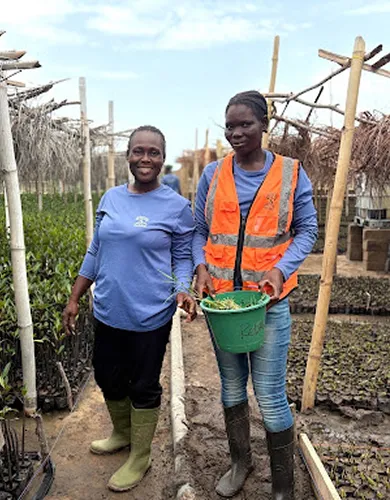
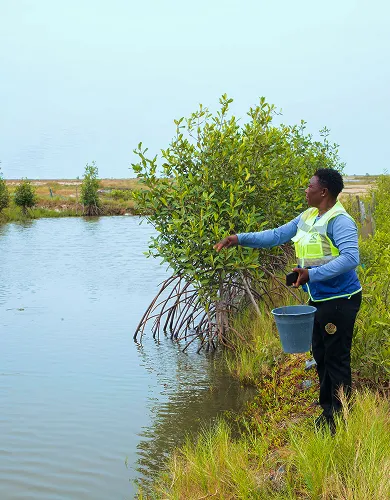
The logic at the heart of this work is that people protect what they have a real stake in. Restoration changes the equation through training and paid work, new livelihoods, and a share in keeping the lagoon healthy — so that protecting mangroves becomes the practical choice.
Behind the scenes of restoration
Behind the planting and the livelihoods is the less visible work that makes restoration possible: land agreements with customary landowning families (long-term land leases with built-in conservation provisions), engagement with traditional authorities and community members, a partnership with the Forestry Commission, environmental permitting, community consultations, Community Trust Funds, and benefit-sharing systems designed to last.
The machinery of restoration can sound bureaucratic. But this work is what turns planting into something that endures — making sure restoration benefits are not just promised, but organized, governed, and directed toward priorities communities choose for themselves.
In the Keta Blue project, at least 32% of carbon revenue is designed to flow back to communities through four channels: jobs and training, livelihood activities, land lease payments, and Community Trust Funds for locally chosen priorities.
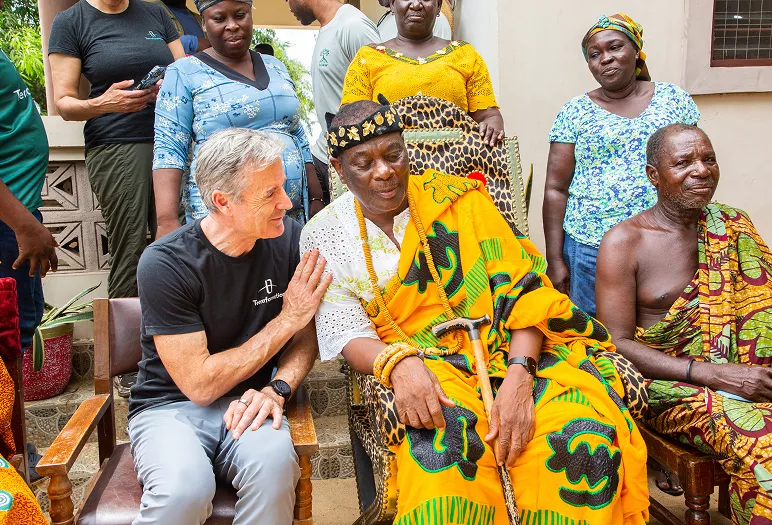

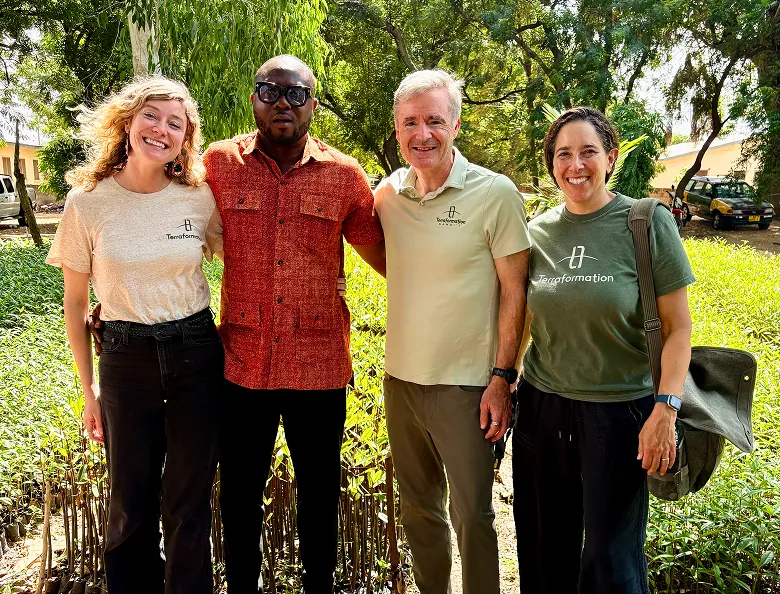
Top: Terraformation President Jad Daley with the traditional chief and landowning family of Atito. The family has signed a long-term lease agreement that helps make the conservation project possible.
Bottom left: Terraformation’s country representative, Eric Twum, with newspaper coverage of the partnership agreement between Terraformation and Ghana’s Forestry Commission — one piece of the institutional foundation needed to support long-term landscape-level restoration in the Keta Lagoon.
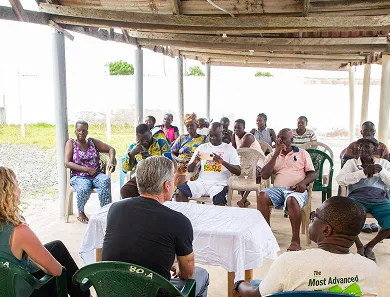
Bottom Right: The Terraformation Team meets with Community Trust Fund (CTF) board members in Fiaxor. CTFs are designed to be governed by community representatives — including traditional leaders, landowners, fishers, reed collectors, farmers, women, and youth — so that community benefits can support locally chosen priorities, from sanitation and school improvements to clinic facilities and public meeting infrastructure.
Beyond Ghana
Mangroves are more than carbon sinks. They are fish nurseries. Storm buffers. Shoreline stabilizers. Sources of food and fuel. Places of memory, income, and identity. Places where children grow up.
Losing these ecosystems is not only an environmental loss. It is a social and economic one — felt most immediately by the communities who depend on them, and lastingly by the generations who will inherit what remains.
Mangrove restoration requires technical knowledge and a system in which the people who live alongside mangroves have genuine, lasting reasons to protect them: paid work, livelihood options, trusted governance, and benefits that reach community priorities. The Keta Lagoon Blue Carbon Project is a notable attempt to build that system, and it’s evolving with lessons learned from the field. The project is designed to last for a hundred years or more: a multi-generational commitment in which the communities at its center are stewards for the long term.
The cumulative attention to the world’s mangrove forests is starting to show progress. In June 2026, a study in Science drew on four decades of NASA satellite imagery to show that the world's mangroves have turned a corner — from decades of decline to recovery. But not everywhere: West and Central Africa are still losing ground. That is exactly where Keta Blue sits, and exactly why this work matters.
This World Mangrove Day, we’re celebrating the two-year-old roots that are taking hold in the lagoon, and the mangrove forests worldwide that are doing the quiet work of holding coastlines, and communities, together.
Stay Connected
Want to keep up with what we're learning, building, and exploring?
Subscribe to The Understory, our podcast featuring candid conversations about the future of nature restoration, and sign up for our newsletter to receive the latest stories, insights, and updates from the field.
Follow Terraformation on social media:
- LinkedIn: Terraformation
- Instagram: @globalterraform
- X: @TF_Global
- Facebook: Terraformation
And to go deeper on any of the above, reach out: info@terraformation.com.